Summary

  1. Recap: Deaths reported in Russia and Ukraine as both sides trade attackspublished at 10:58 BST
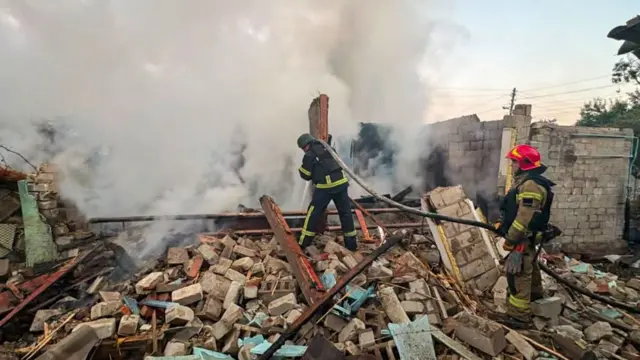
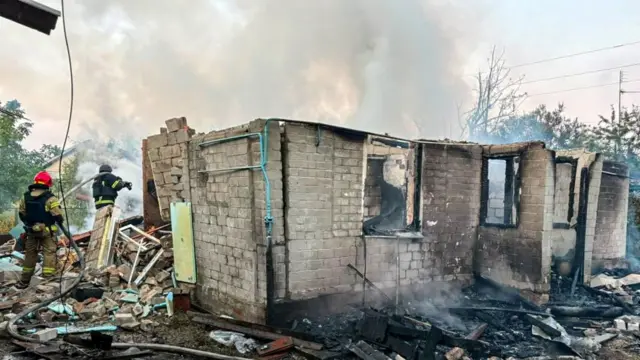
    Firefighters work at the site of a private house - heaps of rubble is on the floorImage source, State Emergency Service Of Ukraine
    Image caption,

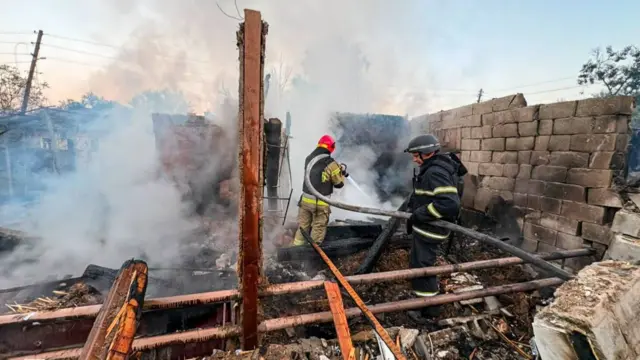
    Balakliya was hit by drone attacks overnight, with local officials reporting three deaths this morning

    Officials in Russia and Ukraine have been reporting deaths and injuries following attacks.

    It comes as President Zelensky said Ukraine has hit two Russian oil refineries.

    Here's the latest this morning:

    In Russia

    In Ukraine

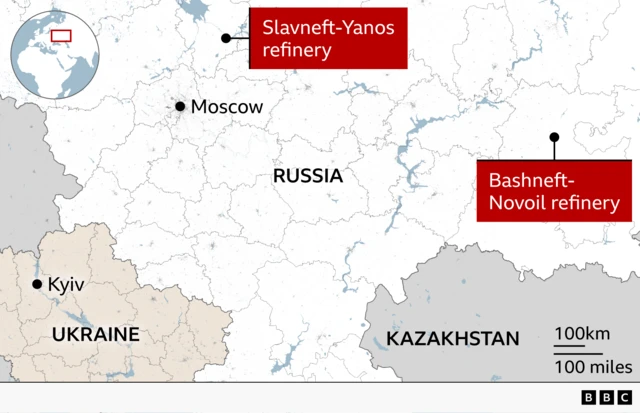
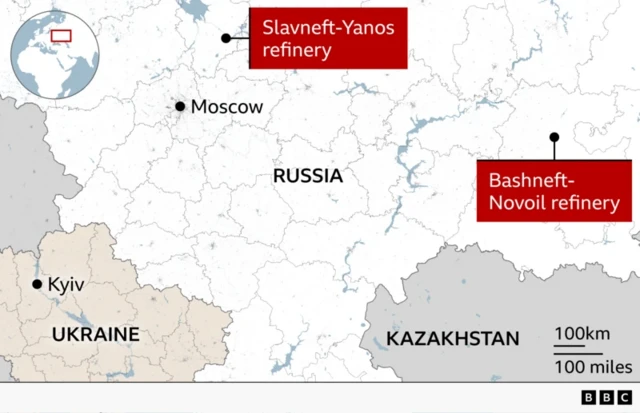
    Locator map of western Russia highlighting two oil refineries targeted in Ukrainian drone attacks. The Slavneft-Yanos refinery is marked near Yaroslavl, north east of Moscow, while the Bashneft-Novoil refinery is marked farther east near Ufa. Kyiv in Ukraine and Moscow in Russia are labelled for reference, and an inset map shows the area's location within Europe.
  2. Depleted air defences leave Ukraine more vulnerablepublished at 10:38 BST

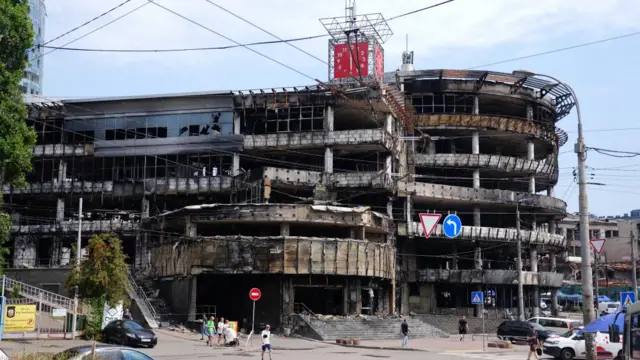
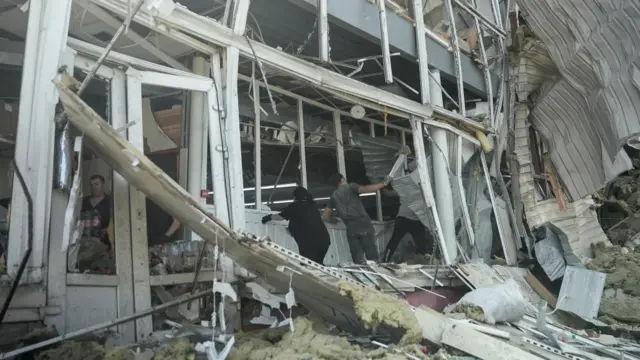
    A general view of a shopping centre damaged by Russian strikes in the Lukianivska district of Kyiv during Britain's Defence Secretary Wes Streeting’s one day visit to the Ukrainian capitalImage source, Reuters
    Image caption,

    A shopping centre damaged by Russian strikes in Kyiv’s Lukianivska district, pictured on 5 August

    Ukraine has been struggling to intercept Russian attacks recently because of depleted air defences.

    Zelensky said earlier this week that supplies from partners had "significantly decreased", with the number of air defence missiles supplied dropping threefold compared to 2025.

    Nato Secretary General Mark Rutte said on Wednesday that he had spoken to Zelensky and was discussing with allies how they can continue to get Ukraine the air defences they "urgently need".

    For years, Ukraine has relied on US supplies of Patriot interceptor missiles to shoot down Russian ballistic missiles, but the US has used many of its stockpiles during the war with Iran.

  3. Russian attack on Sumy injures 12 - officialpublished at 10:27 BST

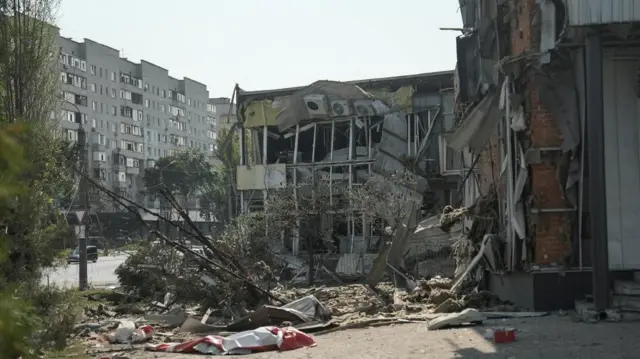
    An overnight Russian attack on Sumy, a city in north-eastern Ukraine, has injured 12 people, according to officials.

    Ukraine's State Emergency Service says the strikes hit civilian infrastructure and blocks of flats.

    Sergiy Kryvosheenko, head of the Sumy City Military Administration, says a 54-year-old man is in a critical condition, while two women aged 71 and 51 are in a moderate condition. All three are being treated in hospital.

    Six others are receiving outpatient treatment, while three received medical assistance at the scene, he adds.

    A street showing a ruined multi story building with rubbish all over the street and trees bent overImage source, Reuters
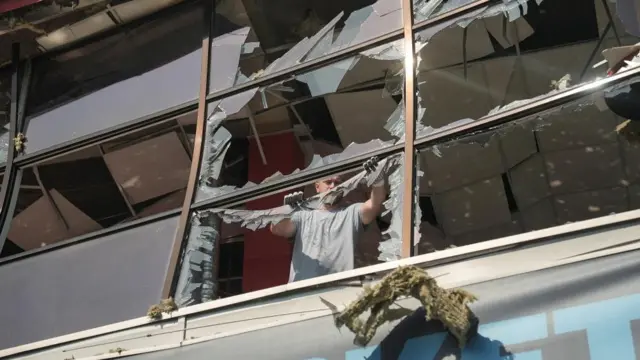
    A man removing glass from smashed in windows on an upper story of a buildingImage source, Reuters
    People among rubble in a building that has been destroyed, and is wonky and falling to piecesImage source, Reuters
  4. 'We will be with Ukraine until they win,' says UK defence secretarypublished at 10:17 BST

    Streeting and Khmara shake hands in front of a tv screen. A British flag is next to Streeting, and a Ukrainian one next to KhmaraImage source, Reuters

    UK Defence Secretary Wes Streeting has met his acting Ukrainian counterpart, Yevhenii Khmara, during a trip to Ukraine.

    In a social media post, Khmara says they’re thankful for the UK’s "steadfast support for Ukraine".

    Streeting writes that he’s returning from Kyiv "with a clear understanding of Ukraine’s requirements ahead of winter".

    "We will work with allies to mobilise support. We will be with Ukraine until they win," he adds.

  5. Analysis

    In Odesa, no-one is safe from Russia's new Black Sea strikespublished at 09:57 BST

    Paul Adams
    Diplomatic correspondent in Odesa

    We have just reported that one person was killed and three were injured in a Russian attack on a ship loaded with Ukrainian wheat in Odesa, according to the regional governor.

    It comes as Russia steps up efforts to strangle Ukraine's commercial links to the outside world, launching attacks all along the country's Black Sea coastline.

    From damaged port infrastructure to ships with bridges blackened and containers still smouldering, the evidence is everywhere.

    According to Ukraine's port administration, July saw 57 Russian attacks on civilian vessels, 22 of them at sea, and a further 67 hits on port infrastructure.

    While there have been Russian attacks on international vessels before, they've never been so numerous or so deadly.

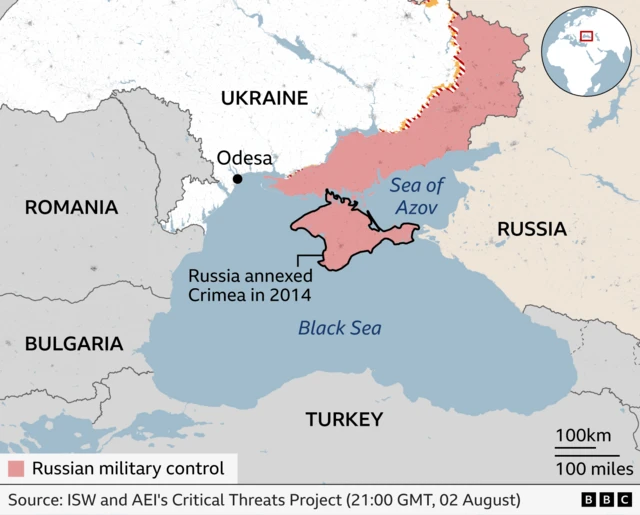
    Map of southern Ukraine and the northern Black Sea showing areas under Russian military control in pink. The map highlights Russian-held territory stretching along Ukraine’s southeastern coast from the Sea of Azov westwards toward the Black Sea, including Crimea, which is outlined and labelled as having been annexed by Russia in 2014. Ukraine, Russia, Romania, Bulgaria and Turkey are labelled, along with the cities of Odesa and the Sea of Azov and Black Sea. A legend indicates that pink shading represents Russian military control as of 21:00 GMT on 2 August.
    Image caption,

    Russia has made Ukraine's Black Sea coastline incredibly dangerous for shipping

  6. Four injured in Yaroslavl refinery attack as storage tank hit, governor sayspublished at 09:46 BST

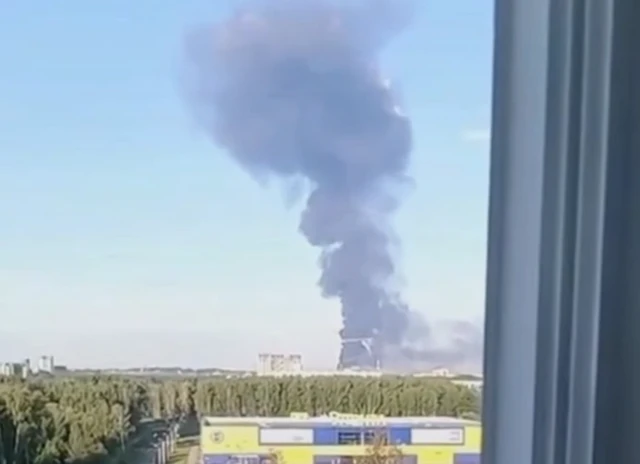
    More news now from Yaroslavl, Russia, where huge clouds of black smoke have been seen over the city.

    Four people have been injured by shrapnel, according to regional governor Mikhail Evraev.

    In a social media post, he also writes that nobody was killed in the attack, but falling debris damaged an oil refinery's storage tanks. Emergency services are working to put out the fire, he says.

    The governor adds that there’s no longer an immediate threat to the area.

    Volodymyr Zelensky has said Ukraine struck the Slavneft-Yanos oil refinery in the city. Evraev said all the drones were intercepted, but debris caused three houses to catch fire and damaged vehicles.

  7. One killed after Russian attack on ship carrying grain - Odesa governorpublished at 09:33 BST

    One person was killed and three were injured in a Russian attack on a ship loaded with Ukrainian wheat in Odesa, the regional governor says.

    In a post on Telegram, he writes that the ship, sailing under the Guinea-Bissau flag, suffered hull damage and that a fire broke out on board.

    Meanwhile, Russia's Defence Ministry says it struck two dry cargo ships delivering weapons in the Black Sea last night, near the port of Odesa.

    It's unclear whether the two incidents are connected at this stage.

    The Black Sea is a vital transport route for Ukraine and has been a key target for Russia throughout the conflict, with attacks occurring all along the coastline.

    According to Ukraine's port administration, July saw 57 Russian attacks on civilian vessels, 22 of them at sea, and a further 67 hits on port infrastructure.

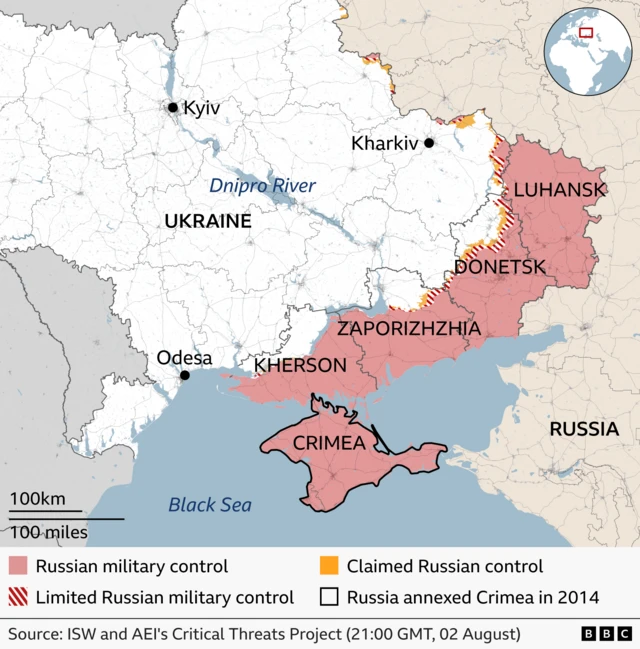
    Map focusing on southern and eastern Ukraine, highlighting Russian military control. Pink shading covers Crimea and stretches across Kherson, Zaporizhzhia, Donetsk and Luhansk regions. A narrow band of red diagonal stripes marks the active front line, with small orange pockets showing claimed control. The Dnipro River and cities such as Kyiv, Kharkiv and Odesa are labelled for reference.
  8. Russian strike on Kharkiv train station kills two, governor sayspublished at 09:22 BST

    A Russian strike on a train station in Ukraine's Kharkiv region has killed two people and injured eight, the regional governor has said.

    Oleh Syniehubov says in a post on Telegram that some of the injured were in serious condition.

    Earlier, we reported that three people were killed in separate Russian strikes on Kharkiv's Balakliya.

    Numerous schools, government offices and homes in Ukraine have been hit by Russia in recent weeks.

    Ukraine has also increased its attacks on Russian civilian infrastructure, including power facilities.

    Both sides have denied deliberately targeting civilians.

    Firefighters work at the site of a private house destroyed during overnight Russian drone strikes, amid Russia's attack on Ukraine, in the town of Balakliia, in Kharkiv region, UkraineImage source, State Emergency Service Of Ukraine
    Image caption,

    Firefighters work at the site of a house destroyed during overnight Russian drone strikes in Balakliya, Kharkiv region

  9. The war is now in its fifth year - how did we get here?published at 09:11 BST

    It started when Russia launched its full-scale invasion of its neighbour on 24 February 2022.

    Russian President Vladimir Putin said his goal was to "demilitarise and denazify" Ukraine - he has repeatedly painted the country as a Nazi state. Our explainer looks at the distortions and untruths that Russia has previously spread about Nazis in Ukraine.

    The Russian leader has long questioned Ukraine's right to exist, claiming that "modern Ukraine was entirely created by Russia" after the communist revolution in 1917.

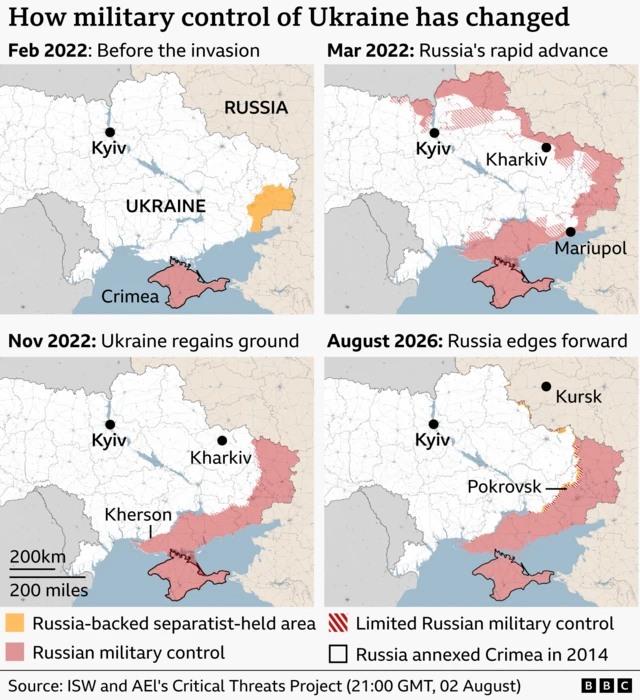
    Four-panel map titled “How military control of Ukraine has changed,” comparing territorial control at four points in time. In February 2022, before the invasion, Russia controls Crimea and Russia-backed separatists hold small areas in eastern Donetsk and Luhansk regions. By March 2022, areas under Russian military control expand rapidly across southern Ukraine and parts of the north and east, with limited Russian control shown around Kyiv and other front lines. In November 2022, Ukraine has regained much of the north and west, leaving Russian-held territory concentrated in the south and east, including a land corridor to Crimea. By August 2026, Russian-controlled territory remains in eastern and southeastern Ukraine and has expanded slightly westward around the front line near Pokrovsk. Key cities marked include Kyiv, Kharkiv, Mariupol, Kherson, Pokrovsk and Kursk. The legend distinguishes Russia-backed separatist-held areas, Russian military control, areas of limited Russian control, and Crimea, which Russia annexed in 2014. Source: ISW and AEI’s Critical Threats Project.

    In February 2022, troops moved in quickly, accompanied by dozens of missile strikes on cities across Ukraine.

    Within a few weeks, Russian forces were in control of large areas of eastern, northern and southern Ukraine - and had advanced to the suburbs of the capital Kyiv.

    However, they met strong Ukrainian resistance - and by November 2022 the picture had changed dramatically. Ukraine had regained ground in the north and Russia failed to take Kyiv.

    Since then, progress on both sides has slowed. In recent months, Russia has been gradually expanding the amount of territory controls - particularly in the east - but gains have been minimal.

  10. BBC Verify

    Verified material shows several smoke plumes at Yaroslavl refinerypublished at 09:01 BST

    By Paul Brown, Peter Mwai and Fridon Kiria

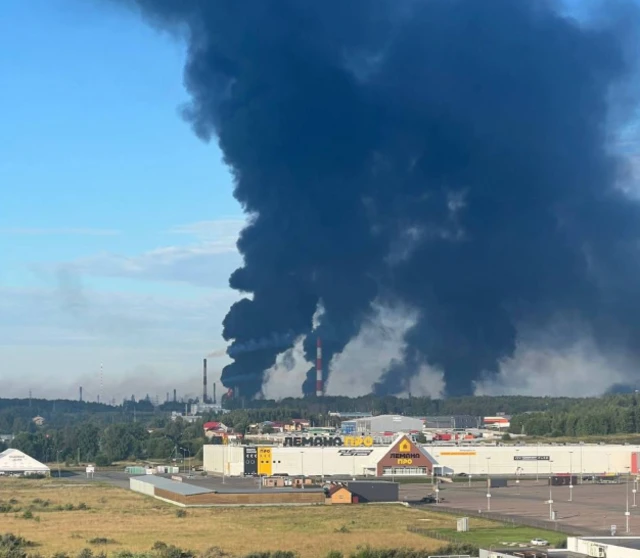
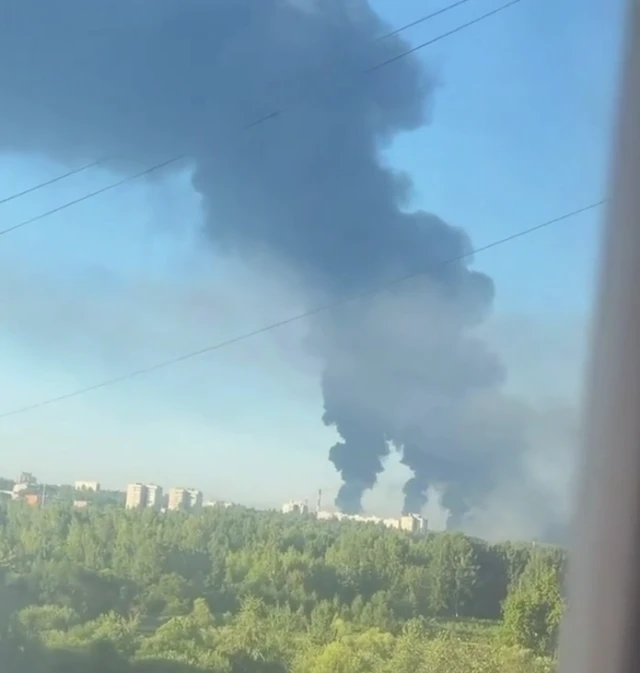
    We have verified multiple videos and images shared on social media showing huge smoke plumes rising from one of Russia’s biggest oil refineries at Yaroslavl, some 280km (170 miles) north-east of the capital, Moscow.

    Ukrainian media reported the facility was set ablaze following a drone attack early on Thursday.

    In one of the verified images on social media there appear to be at least four fires at the site, which is about 700km (430 miles) from the border with Ukraine.

    Four large smoke plumes rising from an oil refineryImage source, Telegram

    Most of the clips appear to have been captured by people living in the city of Yaroslavl itself, several miles away from the refinery.

    Three large smoke plumes rising from a refineryImage source, Telegram
  11. Ukraine hits two Russian oil refineries - Zelenskypublished at 08:50 BST
    Breaking

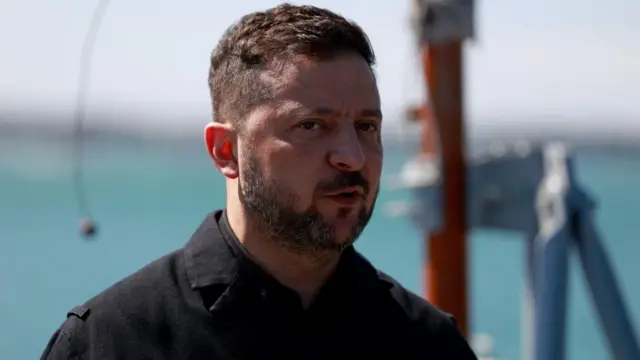
    Ukraine's President Volodymyr ZelenskyImage source, EPA

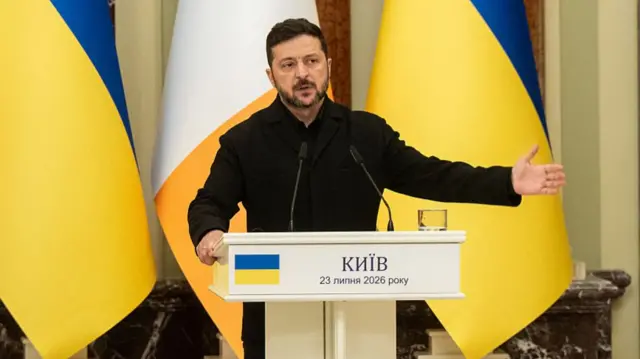
    Ukraine has struck two oil refineries in Russia, President Volodymyr Zelensky says.

    In a social media post, he writes that Ukraine's Defence Forces struck the Slavneft-Yanos refinery in Yaroslavl and the Bashneft-Novoil refinery in Bashkortostan.

    Earlier, we reported that black smoke was rising from the direction of the Yaroslavl oil refinery after Ukrainian drone attacks. Yaroslavl Governor Mikhail Evraev says the Ukrainian drones attacking the region have been destroyed, but falling debris has caused three houses to catch fire.

    Zelensky says they also struck two military patrol boats and vessels from Russia's shadow fleet in the Black Sea.

    Map showing two refineries mentioned by Zelensky on map of Russia
  12. Houses catch fire in Ukrainian drone attack as casualties unconfirmed - Yaroslavl governorpublished at 08:32 BST

    We can now bring you more from Yaroslavl Governor Mikhail Evraev.

    He says that while all the Ukrainian drones attacking the region have been destroyed, falling debris has caused three houses to catch fire and has shattered windows in several apartment buildings. He also describes damage to vehicles.

    Information on casualties is being "clarified", he says.

    Smoke seen rising from the direction of the oil refinery in Yaroslavl, in a social media video verified by the BBCImage source, Social media
    Image caption,

    Smoke seen rising from the direction of the oil refinery in Yaroslavl, in a social media video verified by the BBC

  13. Three killed and several injured in Russian attacks on Ukraine, officials saypublished at 08:13 BST

    A man extinguishes a fire in a smouldering smokey buildingImage source, State Emergency Service of Ukraine
    Image caption,

    In Balakliya, houses were set on fire after Russian attacks, according to officials

    As Ukraine launched more than 600 drones at Russia overnight, attacks continued the other way.

    In the Ukrainian city of Balakliya, the state emergency service says three were killed as Russian drones attacked a residential neighbourhood.

    It adds that fires broke out in homes as a result of the attacks.

  14. Yaroslavl region targeted multiple times in recent monthspublished at 08:08 BST

    ZelenskyImage source, Getty Images
    Image caption,

    President Zelensky, speaking last month

    This is not the first time energy infrastructure in Yaroslavl has been targeted by Ukrainian strikes.

    "Deep strikes" were carried out on oil facilities in the region last month, according to Ukrainian President Volodymyr Zelensky in a Telegram post on 27 July.

    He described the attack as part of an effort to "reduce Russia's ability to finance the war". He also describes having struck an oil facility in the region in a Telegram post on 14 June.

    Meanwhile, Russia's Mikhail Evraev - governor of Yaroslavl - has described drone attacks on the region on multiple occasions in recent months, including on 6 July, 10 July, 16 July and 23 July, although his posts do not reference the refinery directly.

  15. Yaroslavl refinery 'makes 15m tonnes of crude oil annually'published at 08:06 BST

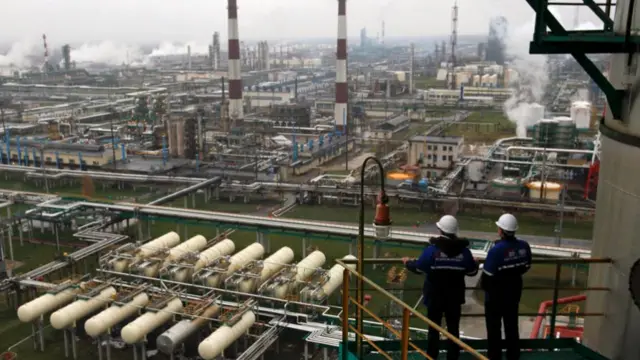
    Two men with hard hats on stand on a balcony and look out, surveying a huge industrial complex which has tanks and chimneys with smoke risingImage source, Reuters
    Image caption,

    Slavneft-Yanos pictured in 2012

    The Slavneft-Yanos refinery is based in the city of Yaroslavl, hundreds of miles from the border with Ukraine.

    It's one of the top five largest refineries in Russia, and was built in 1961.

    It has been attacked by Ukraine before throughout the conflict.

    Its website claims that it "makes about 15 million tonnes of crude oil annually", and its products include fuel for cars, jet fuel, and a wide range of oils.

    It employs 3,500 people.

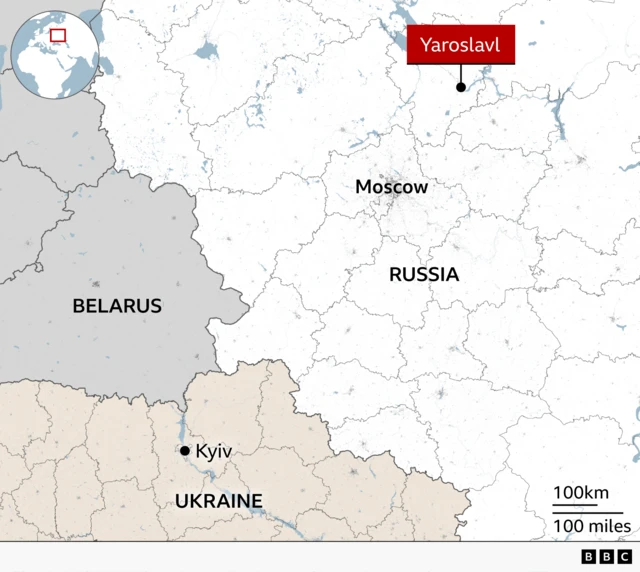
    Map of western Russia highlighting the location of Yaroslavl. The city is marked northeast of Moscow with a red label and pointer. Belarus lies to the west and Ukraine to the southwest.
  16. Russia destroyed 605 drones overnight, defence ministry sayspublished at 08:05 BST

    The Russian defence ministry says overnight, air defence forces intercepted and destroyed 605 Ukrainian drones.

    This occurred over several territories, including the Moscow Region and the Black Sea, as well as Yaroslavl - home to the Slavneft-Yanos oil refinery.

  17. Black smoke rises in Russian city after Ukrainian drone attackpublished at 08:03 BST
    Breaking

    Thick black smoke is rising over the Russian city of Yaroslavl this morning following a Ukrainian drone attack.

    The region’s governor Mikhail Evraev says the region faced its largest-ever enemy attack, adding that they destroyed 92 drones.

    Yaroslavl is home to one of the largest oil refineries in Russia and has been targeted by Ukraine in recent months.

    Meanwhile, in Ukraine, three people were killed in Russian strikes on the city of Balakliya, according to officials, and 12 were injured in Sumy.

    The Russian Defence Ministry says it struck two vessels transporting military goods in the port of Odesa last night.

    We’ll continue to bring you updates from our teams across the region - stick with us.