Summary

  1. US and Tehran trade strikes, as Iran buries former supreme leaderpublished at 18:56 BST 9 July

    Katie Williams
    Live reporter

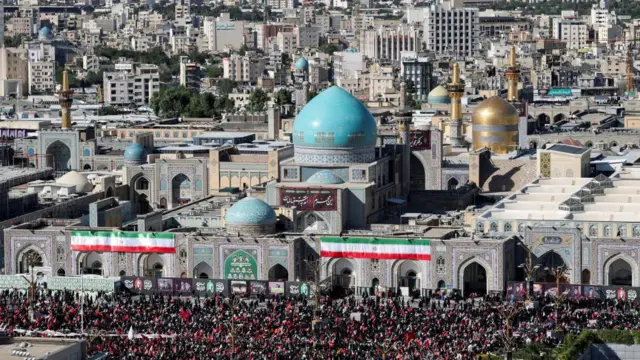
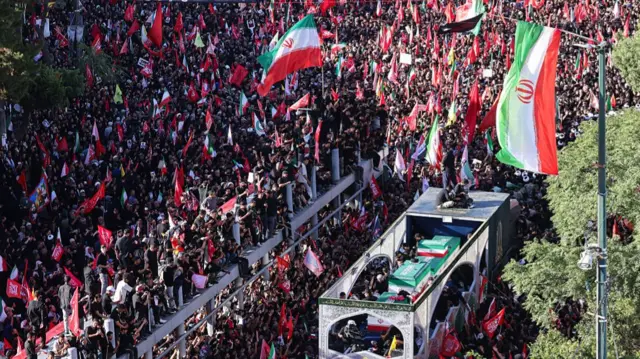
    Mourners gather by Imam Reza shrine, on the day of of the burial of Iran's late Supreme Leader Ayatollah Ali KhameneiImage source, Reuters
    Image caption,

    Mourners gather at the shrine of Imam Reza for supreme leader's burial

    Iran has launched fresh strikes on US targets today, following a second night of strikes between the two countries last night.

    The fragile ceasefire between the two countries was ruptured earlier this week when the US accused Iran of targeting commercial shipping in the Strait of Hormuz.

    The US military says it struck around 90 Iranian targets on Wednesday night, and more than 80 the night before.

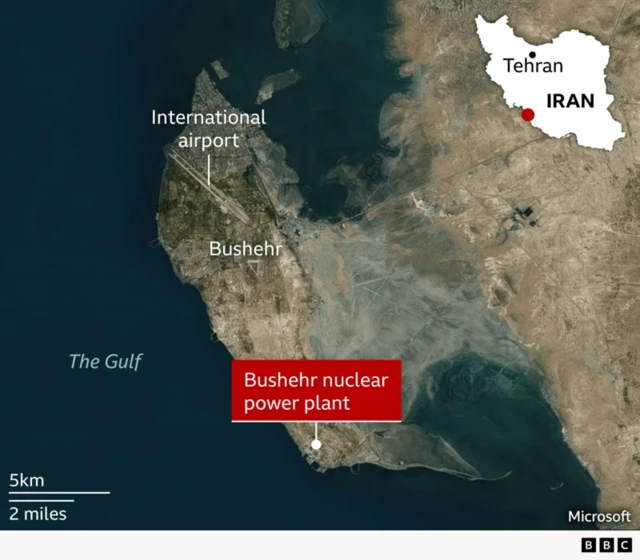
    Iranian state media has accused the US of striking near its Bushehr nuclear power plant this afternoon. The US military is not commenting.

    The BBC has verified images from southern Iran showing damage to a control tower at a major port, and images of a damaged railway bridge in the north.

    Elsewhere, Jordan - where the US operates a military base - said it intercepted eight missiles earlier today in a statement shared with state media by the armed forces.

    And Tehran says it targeted three Gulf nations with drones overnight - Kuwait, Qatar and Bahrain.

    Meanwhile, the final day of public mourning for Iran's late Supreme Leader Ayatollah Ali Khamenei has taken place while strikes have been exchanged. Huge crowds have gathered for his burial this evening.

    We are now bringing our live coverage to a close - you can read more in our news story.
  2. A grim predictability: BBC correspondents reflect on renewed US-Iran strikespublished at 18:44 BST 9 July

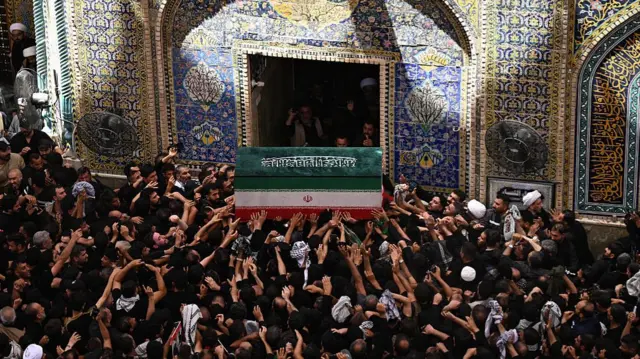
    Mourners carry the coffin of Iran's slain supreme leader Ali Khamenei at the Imam Ali shrine in Najaf on July 8, 2026.Image source, Getty Images
    Image caption,

    Mourners have been gathering for former Supreme Leader Ali Khamenei's funeral ceremonies in recent days - he is being buried in the holy city of Mashhad today

    It's sometimes difficult to make sense of this on-again, off-again conflict.

    The BBC's correspondents have been keeping a close eye on developments, following a series of strike exchanges between the US and Iran.

    Chief international correspondent Lyse Doucet writes that "neither side wants to return to all-out war, but they're also ready to keep punching to make their point".

    She points out that hawkish hardliners are applying pressure on both sides, but it's likely that "behind the scenes, mediators are working hard to cool tensions and keep them talking".

    Security correspondent Frank Gardner asks: Who blinks first over the Strait of Hormuz?

    He describes a "grim predictability" about what's happening, with the latest flare-up in fighting making it "harder than ever to reach a lasting deal".

    And from the US, White House reporter Bernd Debusmann Jr says many Democrats in the US are "calling on the White House to seek congressional authorisation for renewed hostilities".

    He reminds us that the Republican-controlled US Senate approved a measure last month demanding that Trump halt the war or seek congressional approval; "a largely symbolic gesture that was nonetheless seen as a rare rebuke of Trump".

  3. I played cricket in the Strait of Hormuz - but I won't return any time soonpublished at 18:38 BST 9 July

    James Beardsworth
    BBC Outside Source

    Thousands of sailors are still trapped in the Strait of Hormuz - yesterday, the International Maritime Organization put the figure at 6,000, while urging ships not to try to pass the waterway.

    One ship captain, who was stranded in the waterway for 23 days in March, tells the BBC World Service's Outside Source programme how they coped when rockets were flying overhead.

    "We started taking it normal, my crew [was] playing cricket onboard," Captain Anil Ji says.

    But it was a difficult time for the men's families. Captain Virendra Vishwakarma, who was anchored nearby, says: "Every day they worried, asking when I am coming back."

    Both men are now back in India - and say they won't return to the strait any time soon.

    "I think it will take time for me to go to Hormuz," says Capt Ji. "Hormuz is not going to be safe for another few years.

    "They have laid out so many sea mines and they will be floating, I don't know where. It will be unsafe for a few years."

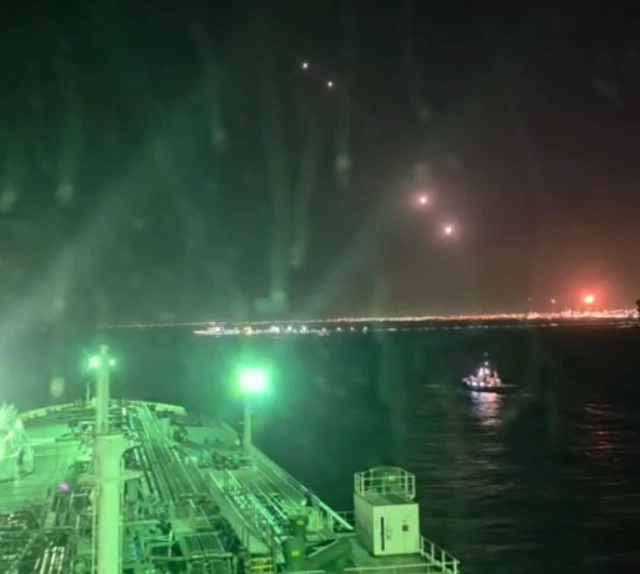
    The seafarers shared footage of projectiles being launched over ships near the straitImage source, BBC Outside Source
    Image caption,

    The seafarers shared footage, taken when they were stranded earlier this year, of projectiles being launched over ships near the strait

  4. Iranian strikes 'failed to cause major damage' - US defence officialpublished at 18:18 BST 9 July

    A US defence official says dozens of missiles and drones fired by Iran caused no significant damage or injuries, according to remarks cited by AFP.

    Speaking on condition of anonymity, the official says the strikes "were intercepted or failed to cause major damage", and there were "no US injuries".

  5. US targeting 'places of great importance' to Iranian peoplepublished at 18:06 BST 9 July

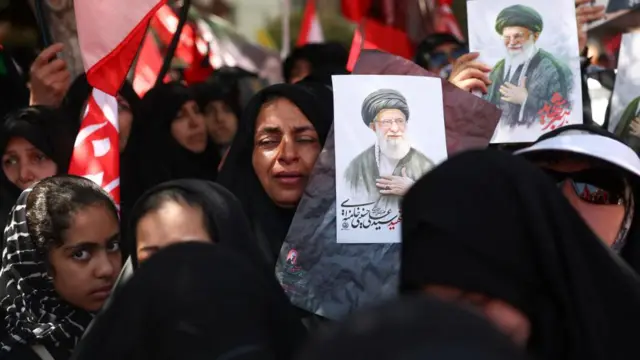
    Several women seen at the burial ceremony of Iran's former supreme leader. Some are holding artwork of him.Image source, Reuters
    Image caption,

    Huge crowds gathered in Masshad on Thursday for the burial ceremony of the former supreme leader

    Locals in Iran have reacted to the latest set of US strikes in the south of the country.

    One woman tells BBC Arabic that the strikes have targeted "places of great importance" to the country's people, including a rail line to Mashhad - where the country's former supreme leader is being buried today - and the area of Bandar Abbas.

    She adds: "This is a direct, direct attack on the livelihoods of the Iranian people."

    Another woman, who is a journalist, says she did not feel afraid or threatened by the recent strikes. She adds that those around her have been calm and "didn't pay much attention" to the matter.

    She tells BBC Arabic: "We all know very well that Iran is a strong country, and that there are those who support and stand by it in difficult times."

  6. No comment from US military on reported strike near Bushehr nuclear plantpublished at 17:59 BST 9 July

    Earlier, we brought you reports from Iran that the perimeter of a nuclear power plant was hit by US strikes in Bushehr.

    We asked the US Central Command for a response - they tell us: "We have nothing for you on this."

    Earlier, BBC Verify looked at social media footage that some people were wrongly claiming showed the US strikes.

    Map showing location of nuclear power plant
  7. Who was Iran's former Supreme Leader Ayatollah Ali Khamenei?published at 17:53 BST 9 July

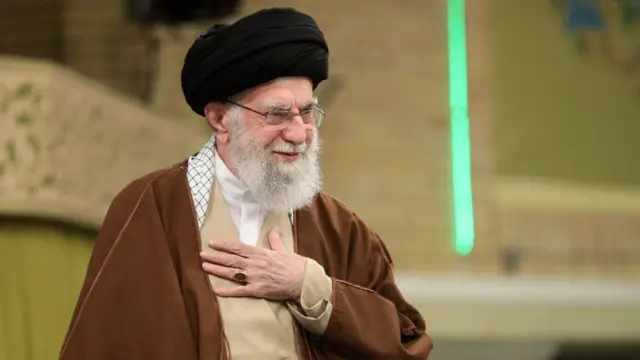
    Iranian Supreme Leader Ayatollah Ali Khamenei in January 2025Image source, Iranian Leader Press Office/Anadolu via Getty Images
    Image caption,

    Iranian Supreme Leader Ayatollah Ali Khamenei in January 2025

    The burial of the late Ayatollah Ali Khamenei will symbolise the end of his rule from 1989 to 2026.

    During his 30 years of power, Khamenei developed networks of loyalists in every area of the Iranian establishment - including parliament, the judiciary, the police, the media, and the clerical elite.

    Khamenei also encouraged a cult of personality to ensure public devotion, backed up by political repression and the arbitrary arrest of political opponents.

    Young Iranians have never experienced life without him in charge.

    Today he will be buried in the place where he previously said he had a "poor but pious" childhood and defined his religious beliefs as a Shia Muslim.

    He was killed within the first few hours of the US-Iran war, which began on 28 February.

  8. Funeral procession to end with prayer from 101-year-old grand ayatollahpublished at 17:47 BST 9 July

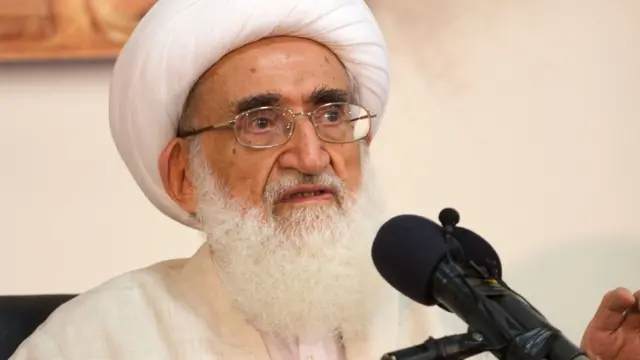
    101-year-old Grand Ayatollah Hossein Noori Hamedani, pictured in 2017Image source, Creative Commons
    Image caption,

    Iranian state media reprots that 101-year-old Ayatollah Hossein Noori Hamedani will lead the prayer for Ali Khamenei's before his burial

    The funeral procession for Iran's former Supreme Leader Ayatollah Ali Khamenei will conclude with a prayer from 101-year-old Ayatollah Hossein Noori Hamedani, Iranian state TV report.

    Hamedani, who was born in 1925, is known to be one of Iran's most hard-line clerics.

    Thousands are already on the streets of Mashad awaiting Khamenei's burial, which will be the culmination of six-day funeral procession.

    It has seen the late supreme leader's body transported through various sites within Iran, and even through two of Shia Islam's holiest shrines in neighbouring Iraq.

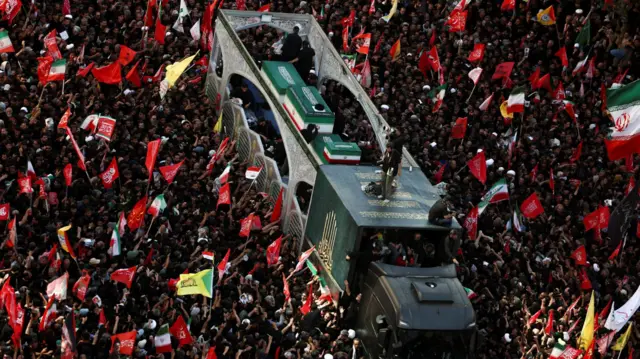
    Mourners gather around a vehicle transporting the coffin of Iran's late Supreme Leader Ayatollah Ali Khamenei, who was killed on February 28 in Israeli and U.S. airstrikes, and his family members, on the day of his burial, in a culmination of a mass funeral, in Mashhad, Iran, July 9, 2026Image source, Reuters
    Image caption,

    Thousands of mourners have gathered on the streets of Mashhad ahead of the burial of Iran's former supreme leader Ali Khamenei

  9. Mashhad: Iran's holiest city and Khamenei's final resting placepublished at 17:37 BST 9 July

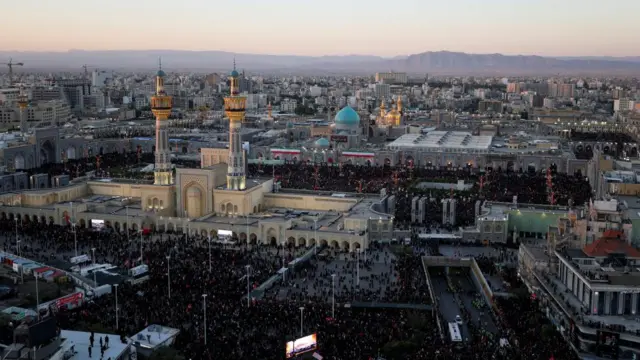
    The shrine of Imam Reza visible from a high vantage point in Mashhad. A dusk sky is visible in the horizon.Image source, Reuters
    Image caption,

    Mourners gather at Imam Reza's shrine in Mashhad on Thursday

    Crowds have gathered in the north-eastern Iranian city of Mashhad for the burial of former Supreme Leader Ali Khamenei.

    The country's second largest city, after Tehran, is also its holiest - and Khamenei's birthplace.

    It is home to Imam Reza’s holy shrine, who was the eighth Shia imam and the only one believed to have been buried in Iran.

    The former supreme leader will be buried at the shrine as part of his funeral.

    The shrine has been described by Unesco as one of the most significant religious places for Muslims and Iranians across the world.

  10. Masses gather for Khamenei's burial despite Iran-US missile exchangespublished at 17:33 BST 9 July

    Matt Spivey
    Live editor

    Crowds of mourners surround the convoy carrying the coffins of Ali Khamenei.Image source, Getty Images

    As the US and Iran continue to exchange strikes, huge crowds have gathered in Iran's holiest city for the burial of former Supreme Leader Ayatollah Ali Khamenei.

    His coffin has been displayed around Iran and Iraq for six days and will be buried in Mashhad. A plane carrying his body arrived in the city earlier today.

    Khamenei was killed in February during the first few hours of the Iran war.

    In our next few posts, we'll bring you up to speed on what you need to know about the burial.

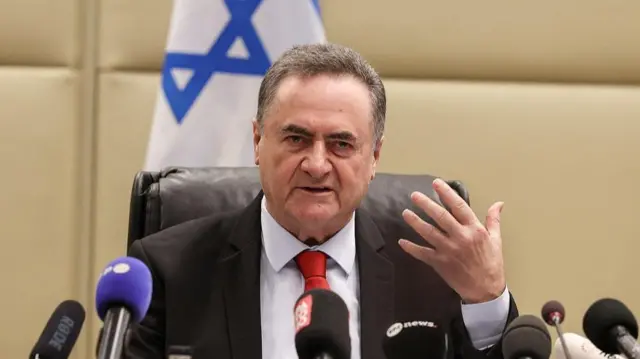
  11. Israel prepared to attack Iran for third time if necessary, defence minister sayspublished at 17:24 BST 9 July

    Israel's Defence Minister Israel KatzImage source, Reuters

    Israel's Defence Minister Israel Katz says the country's military is "alert and prepared for the resumption of the campaign" in Iran.

    He adds this could include attacking the country for a "third time" if necessary, local media reports him as saying during a speech at a pilot's graduation ceremony.

    Israel has been involved since the start of the war in Iran, launching joint strikes with the US on 28 February.

  12. Oil prices steady despite renewed attackspublished at 16:56 BST 9 July

    Michael Race
    Business and economics reporter

    Stock markets in the US have steadied in early trading on Thursday following the renewed attacks by the American military forces on Iran.

    Oil prices have also settled, with a barrel of Brent crude - the global benchmark for prices - at about $77 as traders weigh up the impact of these further strikes on global supply.

    Part of the reason for the rebound is due to gains in microchip stocks, which have offset concerns from investors about the conflict in the Middle East.

    As the IMF suggested yesterday, there are two key forces "pushing in opposite directions" impacting countries differently across the world at the moment.

    The first one is the energy supply shock caused by the US-Israel war against Iran, which is pushing up prices and the cost of living.

    The second is the "technology shock", which it says is being driven by the acceleration and deployment of artificial intelligence tools.

    It appears these two forces are the main drivers behind trading at the moment.

  13. US and Iran exchange fire - a recappublished at 16:45 BST 9 July

    Jacob Phillips
    Live reporter

    Media caption,

    Video shows fire at southern Iranian fishing dock after US strikes

    The US and Iran have exchanged tit-for-tat fire as tensions are rising again in the Middle East.

    Tuesday saw the worst exchange of strikes between the US and Iran since a deal - known as the memorandum of understanding (MoU) - was signed on 17 June.

    Iran's health ministry says 14 people have been killed in attacks on Tuesday and Wednesday.

    Strikes continued overnight on Wednesday and more attacks have been reported today:

    US strikes Iran for second night in a row

    Iran targets US military sites

  14. 'Deliberate hostile action' likely in the Strait of Hormuz, UK maritime agency warnspublished at 16:26 BST 9 July

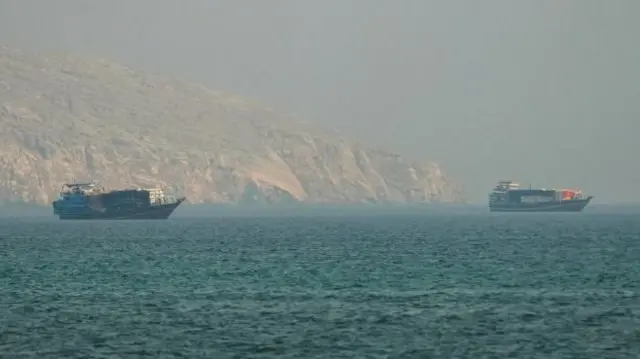
    Tow ships visible on top of a turquoise sea. Coast is visible in the background beyond a layer of fog.Image source, Reuters
    Image caption,

    Vessels could be seen in the strait on Thursday

    The threat level to maritime security in the Strait of Hormuz has been raised to severe by the United Kingdom Maritime Trade Operations (UKMTO).

    The agency says "deliberate hostile action" is likely under current conditions in the vital waterway - through which roughly 20% of the world's oil and liquefied natural gas usually passes.

    It adds that commercial traffic through the waterway is continuing at reduced levels through two separate routes, a southern corridor close to Oman and a northern route beside the Iranian coast.

    Our colleagues at BBC Verify reported earlier that Iran has been blamed for five strikes on ships using the route through the Strait via Omani waters, recommended by the American military.

    Iran has been trying to assert control over the strait and demanded that ships take its government-approved route close to its Gulf coast.

  15. BBC Verify

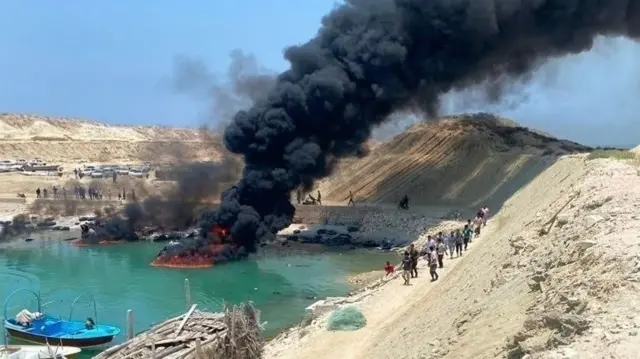
    Video shows smoke rising from fishing pier, not nuclear power plantpublished at 16:11 BST 9 July

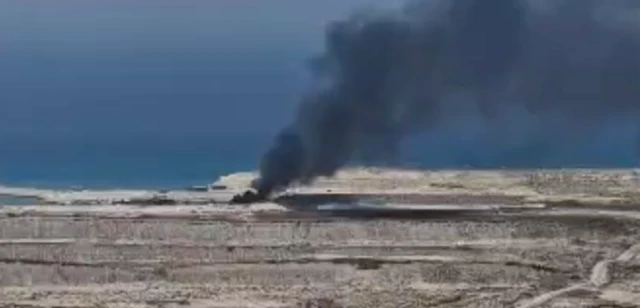
    A screengrab of a large smoke plume rising into the air, with sandy open ground in front of it and the sea in the backgroundImage source, Mehr News Agency

    By Benedict Garman, Ghoncheh Habibiazad and Richard Irvine-Brown

    Alongside reports the nuclear power plant in Bushehr has been struck, a video has been shared on social media wrongly claiming to show the aftermath of the reported attack.

    The video actually shows a smoke plume rising on the fishing harbour at Banood, about 150 miles (250km) to the south-east of the nuclear plant. It was originally shared with the correct location by Iran's semi-official Mehr News Agency.

    BBC Verify was able to determine the video showed Banood harbour, rather than the nuclear plant, by matching the shape of the coast and the road layout to satellite imagery.

    The governor of Asaluyeh, the nearest city to Banood, says two projectiles hit the fishing pier at 09:10 local time (04:40 BST). He adds that 10 fishing boats were set on fire.

    Photos from the pier, verified through comparison of recent public images taken there, show people inspecting damage to boats in the harbour and large plume of smoke matching the Mehr footage.

    A large smoke plume rises from a boat inside a harbour, people are watching from. At least two other boats appear to be on fire.Image source, Telegram
  16. Iran is ready to defend itself, foreign minister sayspublished at 16:03 BST 9 July

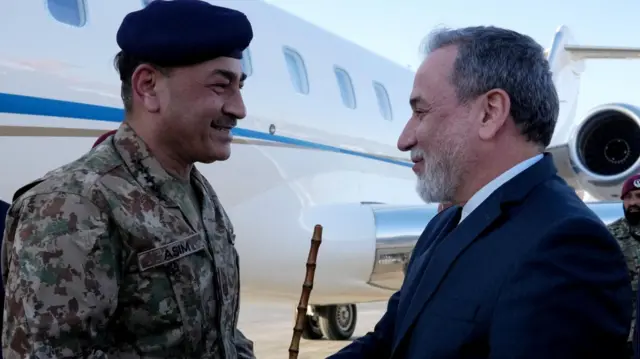
    Iranian Foreign Minister Abbas Araqchi welcomes Pakistan army chief Asim Munir at an airport in Tehran, Iran, April 15, 2026Image source, Reuters
    Image caption,

    Details of a phone call between Iranian Foreign Minister Abbas Araqchi (R) and Pakistani Field Marshal Asim Munir (L) have been published by Iran

    In a statement, Iran's Foreign Minister Abbas Araghchi has "strongly condemned" US strikes across Iran.

    He calls them a violation of the deal - a 14-point memorandum of understanding - signed between the two countries last month.

    Aragchi reportedly told Pakistan's Field Marshal Asim Munir, who has been a key figure in mediatory talks, that Iran is ready to defend itself in the case of further US attacks.

  17. Iran's foreign minister stresses importance of de-escalating tensionspublished at 15:53 BST 9 July

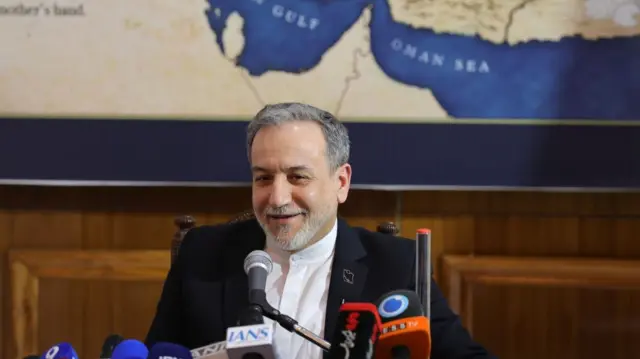
    Iran's Foreign Minister Abbas AraghchiImage source, EPA

    Iran's Foreign Minister Abbas Araghchi says he has spoken to his counterparts in Oman and Turkey on the phone, with all parties calling for diplomacy following the recent exchange of strikes between the US and Iran.

    He says they emphasised the importance of working together to "pursue regional issues and prevent the escalation of tensions".

    We've also received a statement from Iran's foreign ministry, we'll bring you more on that in our next post.

  18. US stocks edge higher as Iran strikes threaten volatilitypublished at 15:41 BST 9 July

    Bernd Debusmann Jr
    White House reporter

    The stock market has now opened in the US, with both the S&P 500 and the Nasdaq edging higher thanks to gains in chip stocks.

    The S&P 500 rose 8.9 points - about 0.12% - to open at 7,491.6, while the Nasdaq Composite rose 47.7 points, or 0.18%.

    The Dow Jones Industrial Average, however, fell 98.9 points, or 0.19%, to 52,249.44.

    Overall, gains in chip stocks offset fears of renewed hostilities following the tit-for-tat strikes between US and Iranian forces in the Persian Gulf.

    While Trump yesterday said that the US-Iran ceasefire was "over", he also told reporters that he does not expect a restart of a full-blown conflict and that negotiations might continue.

  19. Three IRGC soldiers killed in strike on south-west Iran - state mediapublished at 15:31 BST 9 July

    Three soldiers from Iran's Islamic Revolutionary Guard Corps (IRGC) have been killed in a strike on Khuzestan province in south-west Iran, according to the state-run news agency IRNA.

    It comes after the IRGC-affiliated Tasnim news agency reported this morning that three people had been killed in an attack on the outskirts of Ahvaz, a city in the province. Others were injured in the attack, according to the province's deputy governor.

    It has not been confirmed whether the IRGC soldiers named in the latest reports are the same casualties.

  20. US Democrats furious after Trump strikes Iran againpublished at 15:09 BST 9 July

    Bernd Debusmann Jr
    White House reporter

    Renewed US military strikes on Iran have largely been met by silence from members of the Republican Party, with public comments few and far between.

    On the other side of the political spectrum, however, Democrats have reacted with fury, with many calling on the White House to seek congressional authorisation for renewed hostilities.

    Last month, the Republican-controlled US Senate approved a measure demanding that Trump halt the war or seek congressional approval - a largely symbolic gesture that was nonetheless seen as a rare rebuke of Trump by lawmakers who have largely fallen behind the president since his return to the White House.

    “Congress voted against more war against Iran," Virginia Democratic Senator Tim Kaine was quoted as saying on Wednesday. "The US should not be launching new strikes without congressional approval and restarting a war that has raised gas prices, killed Americans and hurt the economy."

    Another Democrat, Connecticut Senator Chris Murphy, was quoted as describing the new strikes as "ballooning foreign policy malpractice".

    "The negotiations are a 'waste of time' because Trump's negotiators change by the day," he said, quoting Trump. "So do his goals and demands. It's all gross incompetence that is costing American taxpayers and consumers billions."