(Image: Getty)
___________________________________________________________________
More articles
More about where you live
_________________________________________________________
Hard: Upper intermediate level and above, B2 and above
Introduction
Read the article and answer the questions below. To listen to this article, click here for an audio download.
Read
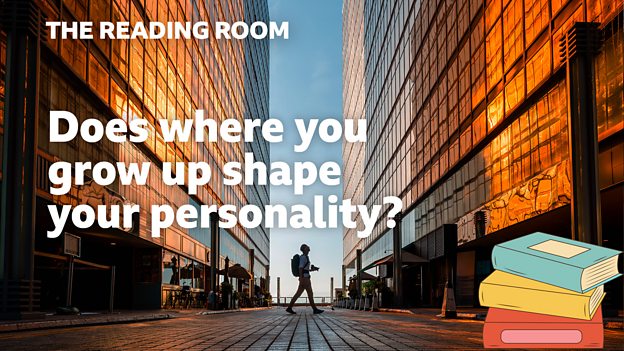
1 Would you be the same person if you'd grown up in different surroundings? How might you be different if you'd grown up in an urban versus a rural environment, or in a different country altogether? This is the age-old, nature-nurture debate that has had people pondering for many years. Is your personality written in your genes or shaped by your experience? Most experts agree that it is a combination of both. Let's hear about ways this can be put to the test.
2 A common way is to study twin pairs, because if personality came only from genes, you might expect identical twins to have the same, or a very similar, personality. Research called 'Meta-analysis of the heritability of human traits based on fifty years of twin studies' looked at 14 million twin pairs in 39 countries. Do identical twins, who share almost identical DNA, have more similar personalities than non-identical twins, who share about half? By comparing the two, the authors concluded that about 50% of the differences between people can be explained by genetic factors, meaning that our genes play a significant role in shaping who we are, but our environment and experiences are just as important.
3 Other studies looked to see whether personality traits were more prevalent in certain geographical regions than in others. For example, in a 2015 study called 'Regional Personality Differences in Great Britain', researchers investigated how the 'Big Five' personality traits, which include extraversion, openness and agreeableness, were geographically distributed. They found there were areas where each trait was more prevalent. For example, agreeableness, which is about friendliness and trust, was more prevalent in the Scottish Highlands and Northern England – more rural areas with lower population densities. Whereas openness, which is associated with curiosity and intellect, was more prevalent in urban, densely populated areas like London, Manchester and Brighton, suggesting that a person's environment can help to foster various traits.
4 While our DNA provides a starting point, it is only part of the jigsaw puzzle that makes our personality. As we go through life, we encounter obstacles, we make mistakes, and we learn what we enjoy through experience – all of which can change how we interact with the world.
Questions
1. Choose the best summary for the article.
a. Personality is mostly influenced by genes.
b. Personality is mostly influenced by the environment.
c. Personality is influenced by a combination of both genes and the
environment.
2. Choose the correct option based on the content of the article.
1. Why are twin studies helpful for understanding what influences personality?
a. We can study whether identical twins have more similar personalities than non-identical twins.
b. We can study how twin pairs interact with each other.
c. We can compare the physical differences between identical and non-identical twins.
2. The twin study meta-analysis found that genetics were exclusively responsible for the personality differences between people.
a. True
b. False
c. Not given
3. One of the 'Big Five' personality traits is flexibility.
a. True
b. False
c. Not given
4. People in the Scottish Highlands and Northern England are more likely to be friendly and trustworthy than other parts of Great Britain.
a. True
b. False
c. Not given
5. What does 'it' refer to in the following sentence? While our DNA provides a starting point, it is only part of the jigsaw puzzle that makes our personality.
a. DNA
b. a starting point
c. the jigsaw puzzle
3. Use the words from the list to complete the summary of the article.
The 1) ________ has intrigued scientists and philosophers for many years. Genes explain about half of the differences between people, but your environment is just as important. A 2015 study found that certain personality 2) ________ were more 3) ________ in certain areas of Great Britain. So, if you have ever 4) ________ how much your personality is influenced by your 5) ________ versus your environment, it turns out, it's a bit of both.

Answers
1. Choose the best summary for the article.
c. Personality is influenced by a combination of both genes and the environment.
2. Choose the correct option based on the content of the article.
1. a.Do identical twins, who share almost identical DNA, have more similar personalities than non-identical twins, who share about half?
2. b. False. … the authors concluded that about 50% of the differences between people can be explained by genetic factors, meaning that our genes play a significant role in shaping who we are, but our environment and experiences are just as important.
3. c. Not given. Agreeableness, openness and extraversion are given as examples of the Big Five, but not the other two.
4. a. True.For example, agreeableness, which is about friendliness and trust, was more prevalent in the Scottish Highlands and Northern England.
5. a. 'It' refers back to the subject of the sentence, which is DNA.
3. Use the words in the box to complete the summary of the article.
The nature-nurture debate has intrigued scientists and philosophers for many years. Genes explain about half of the differences between people, but your environment is just as important. A 2015 study found that certain personality traits were more prevalent in certain areas of Great Britain. So, if you have ever pondered how much your personality is influenced by your DNA versus your environment, it turns out, it's a bit of both.
Vocabulary
age-old
something that has existed for a long time
nature-nurture debate
the discussion about whether people are shaped more by their genes (nature) or their environment and experiences (nurture)
ponder
to think carefully about something
shape
to influence or form something
put (something) to the test
to try something out to see if it works
heritability
how much of a trait is passed down from parents through genes
trait
a characteristic or quality of a person
DNA
the material in your body that carries genetic information and determines traits
prevalent
common, happening often
extraversion
a personality trait where someone is outgoing, social, and energetic
agreeableness
a personality trait where someone is kind, friendly, and cooperative
population density
how many people live in a certain area
foster
to help something grow or develop
Next
Download a PDF version of the questions and transcript.
Learn more English from the news.
Learn more English to talk about where you live.

تازه ترین The Reading Room
Does where you grow up shape your personality?
Episode 260625 / 25 Jun 2026
Are certain regions more likely to have higher levels of a certain personality trait?

Do birds build their homes like humans?
Episode 260518 / 18 May 2026
Birds teach each other how to build a home
How micro-dramas could revolutionise our viewing habits
Episode 260514 / 14 May 2026
How much drama can fit into one minute?

What happens when your job is just too boring?
Episode 251110 / 10 Nov 2025
Are you suffering from rust out?

What are the chances of an asteroid hitting you?
Episode 251109 / 09 Nov 2025
Practise your reading skills and learn about whether it's possible you could be hit by an asteroid!

Britain celebrates 200-year anniversary of passenger trains
Episode 251108 / 08 Nov 2025
Practise your reading skills and learn about the history of trains in English

Can we trust technology in sport?
Episode 251107 / 07 Nov 2025
Practise your reading skills and learn about how well technology is being used in sport

Life lessons learnt from pocket money
Episode 251106 / 06 Nov 2025
Practise your reading skills and learn about the pros and cons of pocket money in English

Is your dog reading your mind?
Episode 251105 / 05 Nov 2025
Practise your reading skills and learn about pets reading your mind in English

How can restaurants earn a Michelin star?
Episode 251104 / 04 Nov 2025
Practise your reading skills and learn about Michelin stars in English

Is food colouring bad for you?
Episode 251103 / 03 Nov 2025
Practise your reading skills and learn about whether food colouring really is bad for you
Small steps to build long-lasting habits
Episode 251102 / 02 Nov 2025
Practise your reading skills and learn about habits in English

Why some people believe AI is human
Episode 251101 / 01 Nov 2025
Practise your reading skills and learn about how AI can seem human in English
How to make a good apology
Episode 250924 / 24 Sep 2025
Practise your reading skills and learn about the art of a good apology in English

Beating brain fog
Episode 250923 / 23 Sep 2025
Practise your reading skills and learn about brain fog and how to avoid it

The joy of missing out
Episode 250922 / 22 Sep 2025
Practise your reading skills and learn the difference between 'FOMO' and 'JOMO'

Making friends as you age
Episode 250921 / 21 Sep 2025
Practise your reading skills and learn about ways to make friends as you reach adulthood
Morning shower or evening shower: Which is best?
Episode 250920 / 20 Sep 2025
Practise your reading skills and learn about hygiene in English

What can magic teach us about the brain?
Episode 250919 / 19 Sep 2025
Practise your reading skills and learn how illusions can tell us what happens in our brain
Can we create the perfect city soundscape?
Episode 250918 / 18 Sep 2025
Practise your reading skills and learn about city soundscapes

The world's first digital country
Episode 250917 / 17 Sep 2025
Practise your reading skills and learn about a country that is slowly sinking underwater

The benefits of spending money on a good time
Episode 250916 / 16 Sep 2025
Practise your reading skills and learn whether it's better to treat yourself by buying a thing or an experience

How to take control of your emotions
Episode 250915 / 15 Sep 2025
Practise your reading skills and learn about emotion regulation