Who were the Ancient Romans?
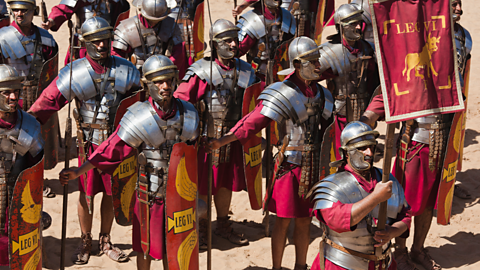
The Ancient Romans were a group of people who lived in Italy around 2,000 years ago.
They started as a small village and, over time, grew into a large empire (an area of land that is ruled by a single person or country, empires usually cover many countries and include lots of people), containing millions of people and lots of different countries, including Britain.
The Romans were famous for their large and well-structured armies, incredible engineering projects and exciting entertainment with gladiators and chariots.
The Roman Empire lasted from 700BC to AD476.
Important words
Important words on Ancient Rome.
| Keyword | Definition |
|---|---|
| Empire | An area of land that is ruled by a single person or country. |
| Formation | A shape or pattern that soldiers stood in to fight their enemies. Different formations were used for different enemies like those on horses or those with bows and arrows. |
| Invaded | To take over land or people by using an army. |
| Rebelled | To fight against people in power. |
| Republic | A system of ruling where people are chosen to lead, rather than having a king or queen. |
| Shrine | A place that is important for worshipping a god or goddess. Some Romans might have had a small shrine to a certain god or goddess in their homes. |
How did Rome grow?
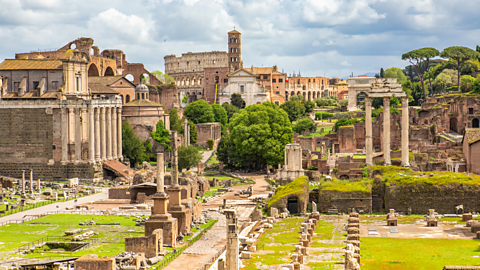
According to the mythical story, Rome started off as a small village, built by a man called Romulus.
Romulus killed his twin brother Remus when they couldn’t decide where to build the new city and fought each other. He is thought to have been the first Roman king.
Rome then slowly grew to include other parts of Italy and around 500 years after Rome was created, the Romans controlled all of Italy and other areas around it.
Around 300 years after that, by AD117, the Romans had taken over lots of other countries and areas including Egypt, France, Spain and large parts of Britain.
The Romans then struggled to keep everyone happy and lots of people rebelled against them.
The city of Rome itself was attacked and burnt down in AD410.
Why was Ancient Rome so significant?
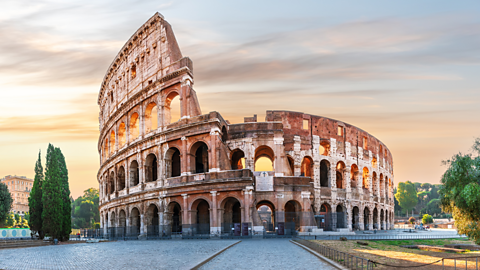
The Romans had lots of great ideas, particularly when building, and their ideas spread throughout their empire.
They built lots of things including:
- Impressive road networks.
- Huge, stone and marble buildings like the famous Colosseum.
- Water tunnels called aqueducts to bring fresh water to towns and cities.
- Bridges for crossing rivers and archways to support large buildings.
Although the Romans weren’t always the first to build all of these things, they did build them incredibly well and helped change the places that they took over.
How did the Romans create their empire?
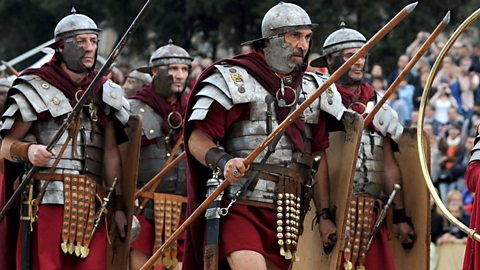
The Romans had some of the largest and most-organised armies in the ancient world.
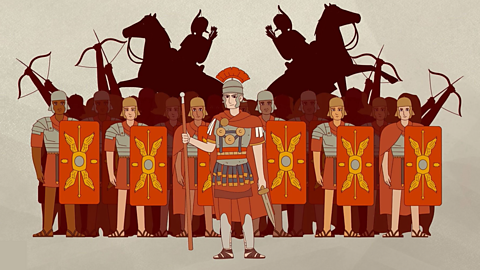
They used clever formations (a shape that the soldiers used to fight their enemies) and worked together as a unit to fight effectively.
Roman soldiers would need to be incredibly fit and trained lots.
They were given strong armour and standard equipment, meaning that they had the same tools and weapons as each other.
These soldiers were often the people on the edges of the empire and would help build the roads, walls, forts and towns as they conquered new places.
Slideshow: The Roman Army
Explore the slideshow to learn more about the Roman army and how they helped create the city of Rome.
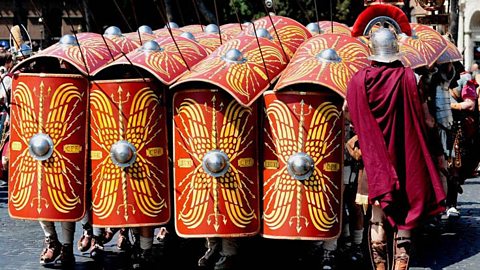
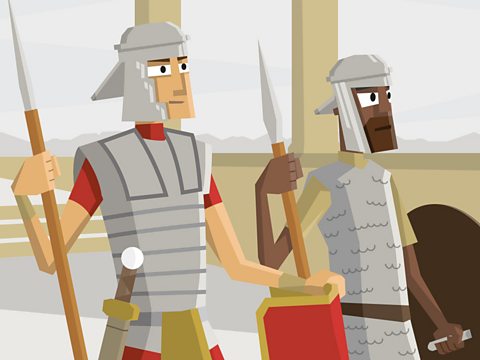
Image caption, A recreation of Roman soldiers, all with the same weapons, shields and armour, in the defensive 'testudo' (tortoise) formation.
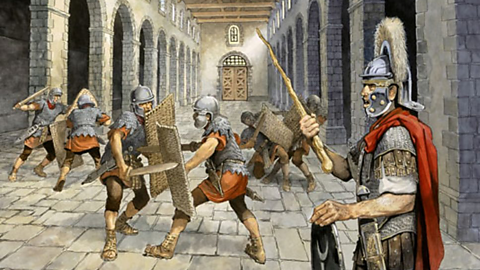
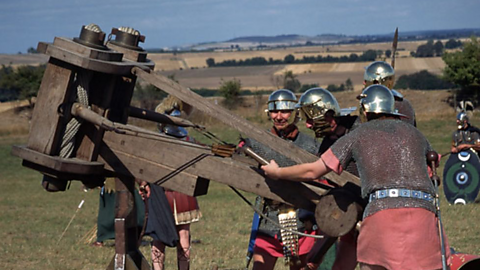
1 of 3
Was religion important to the Romans?
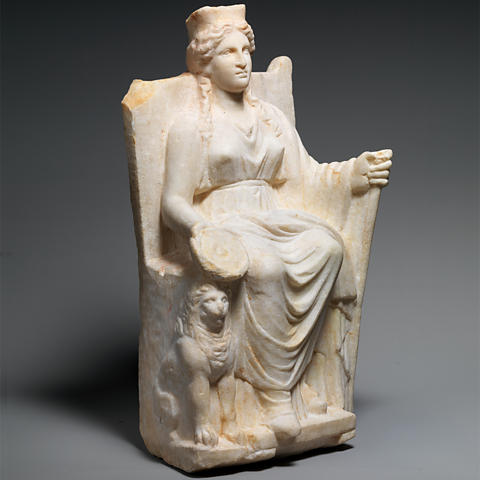
Religion was extremely important to the Romans.
They had gods and goddesses for just about everything, including thunder, love, war, wisdom and even the sewers!
The Romans often built shrines (a place that is important for worshipping a god or goddess) or temples to their gods to try and keep them happy.
Some Romans might have had a small shrine to a certain god or goddess in their homes.
They also took on new gods and goddesses from the places that they conquered.
If those gods were important to the people who lived there, they could have come in useful for the Romans too.
Who ruled Rome?
In the early days, Rome was ruled by kings. Romulus was supposedly the first king.
Rome later became a republic (a system of ruling where people are chosen to lead, rather than having a king or queen). The republic didn’t allow one person to have complete control of the city.
A group of men called senators shared power. The two most powerful people in the senate were the consuls.
Every year, the citizens of the Roman Republic voted for who they wanted to be consul.
After the republic, the Roman Empire began. Roman emperors were the rulers of the Roman Empire from around 27BC.
Watch: Who were the Roman Emperors?
The emperor ruled over the Roman Empire, a bit like a king.
Watch the video to learn more about some of the emperors who influenced Britain.
Find out about the Roman Emperors.
Excuse me! Yes, you! Ever wondered about how the Roman Emperors changed Britain? Great! You can help us rate how impressive they were.
First up, Julius Caesar.
He wasn’t actually an emperor – he was just a really powerful Roman who started the Empire.
He was a great Roman general, a very popular leader and he was a bit of a show off. He tried to invade Britain twice but failed.
Things didn’t end happily for him, when some people in Rome thought he was getting too big for his boots – I mean sandals – they killed him in 44BC.
How impressive was that show off?
Nine! A good start. Next!
Meet Caligula who ruled from AD37 to 41 and was famous for being crazy and cruel.
Rumoured to have made his horse, Incitatus , the head of government and a priest.
He made an attempt to invade Britain, but instead declared war on the English Channel and ordered his soldiers to gather sea shells from the beach.
How do we rate that?
A ten! Well I suppose he was impressively bizarre. Next!
Meet Claudius, the man who finally conquered Britain in AD43. To celebrate he rode an elephant through Colchester.
Now what do we think about that as an impressive entrance?
Another ten, fantastic. Next!
Meet Nero, another Emperor who was known for being a bit crazy.
He was too busy staging musicals back in Rome to visit troublesome Britannia.
During his reign, Queen Boudicca famously led an unsuccessful rebellion against the Romans in Britain.
So, is it a zero for the absent Nero?
No it’s five. Next!
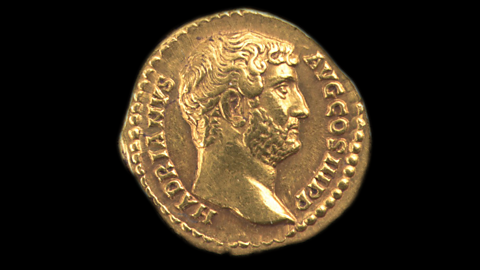
A bit later came Hadrian who ruled Britain from AD117 to 138. He of course built Hadrian’s Wall to prevent invaders from the North.
A nine. Fantastic.
That wall is pretty impressive. Well, there we are, a taster of British Roman history in a matter of minutes.
So which emperor impressed you the most?
Oh, I’ll leave them to convince you.
Think like a historian
Have a look at the thinking points below and think about your answer to each question. You could even write them down on a piece of paper or discuss them with somebody else if you want to.
How did the Romans manage to take over so much land?
How did the Romans impact the places that they conquered?
What evidence might we find now that originally came from the Roman Empire?
Their strong, powerful and well-trained armies were some of the most effective in the ancient world. This allowed them to defeat their enemies and take control of the land, towns and people. They then built defences to stop or slow down any attackers.
When the Romans added somewhere to their empire, they would usually create new buildings such as temples or build roads to join places. These places would then start to look and feel ‘more Roman’.
As the Romans often built with strong materials like stone, marble and metal, we find remains of their buildings, roads, coins, tools and weapons from across their empire. Some remains, like the Colosseum in Rome, are enormous, but others, like coins in Britain, are very small.
Activities
Activity 1: What did Romans do with their spare time?
Click on the Romans below to find out what activities they did.
Activity 2: Quiz – Introduction to Ancient Rome
Grown-ups corner
Are you a parent, carer or teacher?
Take a look at some of the links below on KS2 History which are packed full of knowledge, videos, quizzes and activities.
KS2 History: The Romans
BBC Bitesize for Teachers
KS2 History: The Romans. 5: The legacy of Ancient Rome
BBC Bitesize for Teachers
KS2 History: The Romans. 6: Growing up in Ancient Rome
BBC Bitesize for Teachers
Horrible Histories: Raid and Trade game! game
Play Horrible Histories: Raid and Trade KS2 History
More on Roman Empire
Find out more by working through a topic
- count4 of 4
- count1 of 4
- count2 of 4
