Now the new educational year has begun, you might be experiencing some big emotions as your child starts at a new school or joins a different year group. Focus is quite rightly on the child at times of transition but it can be tough for parents and carers too.
From the moment your child is born, a parent’s job is to teach them to live independently. At first, it happens so gradually that you don’t notice them growing away, but at times of transition such as starting school, leaving infants for juniors or going to secondary school, there’s a big leap and it can be a struggle for parents to come to terms with their new role, or it can bring up feelings that are totally unexpected.
How a step forward for the child can feel emotional for the parent

“You don’t realise you’ve had the last moment of a lot of things until it’s happened,” says actor Charlie Condou, speaking on the BBC Bitesize Parenting Teens podcast.
He describes how his son suddenly decided to walk to school on his own for the first time. While this was a positive step towards independence for the child, Charlie felt it as a significant loss for himself as a parent.
“I realised then that it was much more about me than him,” says Charlie. Often several milestones like this come together when starting a new school or moving up a year group, so the impact on us as parents feels significant.
Consultant Clinical Psychologist Dr Rebecca Johnson says Charlie’s emotion is a common reaction for parents. She works at Togetherness, the NHS team behind evidence-based emotional health learning resources for parents and carers.
“Because we have all had experience of going to school, when your child hits these memorable milestones, it can trigger old feelings from your own childhood,” says Dr Johnson.“It depends what your experience was: if you had a positive, happy experience and you loved school, your expectations are going to be very different from a parent who really struggled at school, or who was very sad to leave a beloved primary school.”
“We might not even be conscious of what’s getting stirred in us,” says Dr Johnson. “But seeing those steps through your child’s eyes has the potential to connect with an unresolved feeling that you’ve pushed aside. Sometimes parents have a really powerful response they weren’t expecting and it can come as a shock.”
She gives the example of when her own children left primary school.
“My head said it was a great moment because life would become logistically easier, they’d be more independent getting home, there wouldn’t be the last minute rushes for dress-up day…
“But in my heart I was really sad for a chapter closing in our lives. It was the jarring of head and heart that was unexpected for me, and I think that’s common for lots of people.”
Dr Johnson continues: “These transitions are complicated, because we’re all different neurologically and physiologically (in our nervous systems); we all have different histories and our children are experiencing their school journeys in their unique ways too.”
Why it's important to spend time preparing yourself for transitions

“Everyone has a template in their unconscious mind of what school can feel like,” says Dr Johnson.
“If you’re very similar to your child, you might expect them starting school to be the same as your experience. If they’re very different to you, you might assume they’ll cope differently, but actually we mustn’t assume we know how our child is feeling about any big change.”
It really pays to spend some time reflecting on any school transition. Explore your own feelings and try to work out if they’re about you as a child, you as a parent, or about what your child is feeling now, advises Dr Johnson.
“Recognise that you have feelings too and find a trusted friend or partner to talk them through with. If you have processed your own feelings from childhood, you can be a better support to your child.”
Togetherness has lots of resources for parents, to help them process their own feelings, and to aid families in communicating and understanding each other. They’re anonymous, self-guided, and you can work through them at your own pace. There’s a whole section on moving up to school that covers primary, secondary and school transition for children with additional needs.
Why is transition a process rather than an event?
Importantly, Dr Johnson says, remember that school transitions are processes, not events.
“The process can take time. There’s a rhythm to transitioning. We all need a bit of scaffolding to hold us up while change happens – that’s why schools have transition days for the children and parents, and why there are events to say goodbye at the end of school too. These events are designed to make the transition slower, so there’s time for everyone to get used to the change, whether that’s starting somewhere new or leaving.”
She continues: “Some children need more scaffolding than others, as do some parents – that could be to do with neurology, past experience or how they learn. And if you need a little cry, find a quiet moment away from your child and do that. Acknowledging the feeling is an important part of moving on.”
You are the expert on your own child, so if you think they need more support, ask for it." Clinical Psychologist Dr Rebecca Johnson
“Trust your instincts,” Says Dr Johnson. "Some children will mask and hold in their feelings all day and then explode in disruptive behaviour when they get home. Others might go very quiet and introspective.”
She points out that you can expect a child to feel overwhelmed when starting a new school – whether primary or secondary – and if they're being highly emotional or withdrawn with you when they get home, that shows they feel safe to express how they’re feeling with you. It's good that they can show their true feelings to you, although it might feel hard for you as a parent.
“What we’re hoping for is that over a few days and weeks, those reactions – be they explosive or withdrawn – will happen less frequently, as the child transitions to the new setting. If that’s not happening, it’s time to talk about it with your child and with the school too.”
What transitions do parents have to make?
“Starting primary school is probably the biggest transition for parents,” says former co-Headteacher Mrs B, who has worked at inner city primary schools in the North of England and small rural primaries in the South West for over 30 years.
“I think we need to acknowledge that schools are scary places for some parents. We all worry about the child starting school, but actually some of the parents waiting in the playground at the end of the day perceive that everyone knows each other and they’re in little cliques so they stand there alone looking isolated.”
She adds: “It’s not easy to go up to a group and introduce yourself. Schools need to make some effort to get the parents together, because they need support from each other, especially when it's your first child starting.
“Attachment is a two-way thing, and you frequently see anxious children with worried parents,” continues Mrs B.
“It’s horrible to have your clinging child peeled off you, while you try not to cry yourself. Staff have to acknowledge that the last thing the parent sees is what will stick with them all day. If a child was crying as the parent left, we made a point of texting or ringing them before 10 o’clock with an update, so they could relax a bit.”
Why can secondary school feel harder for parents?

“The shift to secondary school was much harder with my own children,” says Mrs B.
She points out that there’s less opportunity to meet other parents in the playground – often the children walk or take a bus to school, so it’s hard to meet.
“I remember my daughter wanting to take a different bus home with a new friend after school in Year 7, and I felt so concerned because I didn’t know anything about this friend, the family, where the house was or anything. It was so different to primary friends who lived locally and whom I’d known for years.”
She continues: “Parents have much more control at primary school, they often see the teacher every day. Secondary is so different and to lose that control is frightening. It can be hard to know what the new parenting role is.
“The awareness that parents also need support in transition is growing. But the provision is still not massive.”
Many people go on struggling with difficult situations because they feel they should be able to cope, or that they don’t deserve any help. Try talking to a family member or friend you trust to see if they can offer you any reassurance or support. They may even have had a similar experience that they can share with you.
What support is there for parents of children with additional needs?
If your child has additional needs, it’s going to be more challenging for parents at periods of transition. Trust built with staff at the old setting needs to be rebuilt plus some conditions have an inherent trait of finding change overwhelming.
“Our school had extra transition meetings for children with additional needs, where the parents could meet over a coffee while the children had extra time to get used to the new setting,” says Mrs B.
The Togetherness Project has a dedicated pathway of support and learning for parents of children with additional needs making this transition.
What is autism and how can I support my autistic child at home and school?
Starting secondary school with Special Educational Needs (SEN)
Things to consider on a school visit for your child with SEND
What if my child isn’t coping with the transition?

“Parents need to trust their instincts, particularly when children are neurodivergent,” says Dr Johnson.
“There’s a difference between a child who won’t try something new and who simply can’t and it’s a very difficult area for parents to navigate.”
She adds that as a parent, you’re able to use these transitions as a way to teach children how to deal with big emotions and huge changes by naming the feelings and exploring why they're there. This can give the child confidence that they can cope with both the feeling and the change.
“Reminding the child of other big steps they've come through even though they were scary can be a good strategy to build confidence. It helps if you have already examined your own feelings about these examples and similar transitions in your own life, so that you can listen to your child without your own emotions surprising you.”
Why are transitions so hard and how can I get through them?
“Some moments of parenting are really hard, and transitions can bring up all sorts of emotions and challenges,” says Dr Johnson.
“Try to have some compassion for yourself. Don’t expect to be a perfect parent who is always going to get it right.”
She concludes: “These are big feelings which your child is experiencing and you may have triggered similarly big feelings that have been pushed down inside you since your own childhood. If you can find a safe space outside of the playground to reflect on that and talk it through, it could be helpful for both of you.”
Dr Rebecca Johnson is a Consultant Clinical Psychologist with 30 years of NHS experience including over 20 years on the clinical frontline, predominantly in the field of Child and Adolescent Mental Health, with a special interest in Infant Mental Health, School Improvement, and Parenting.
Additional resources:
Starting primary school features advice and games to help you and your child prepare for primary school, then thrive during their first year.
Starting secondary school has advice for parents who have a child starting secondary school this year, with tips on the emotional and practical sides of the transition.
Dear Bitesize Parenting… How should I feel about Back to School?
The Togetherness (NHS) pathway mentioned above ‘Understanding your child in a changing world’ is available free to all UK residents in 2026. It is one of a number of helpful online, 24/7 self-directed learning pathways they offer.
This article was published in September 2026

Bitesize Parenting
Fun activities, real-life stories, wellbeing support and loads of helpful advice - we're here for you and your child.

Five ways to get your child ready to start secondary school
Your child may be worrying about going up to 'big school' - we've advice to help you support them and make it an easier transition.
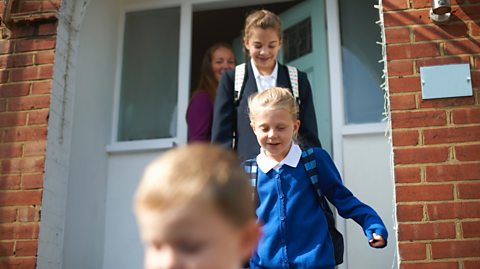
How can I support myself and my child through their school anxiety and avoidance?
EBSA meaning and advice for parents on how to manage their own mental health whilst supporting their child/ teenager during school avoidance
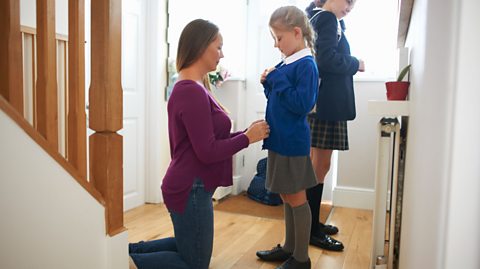
Should I help my child with their homework?
Real parents around the UK share their thoughts on homework. Is it better online? How much is enough? And how can parents help?
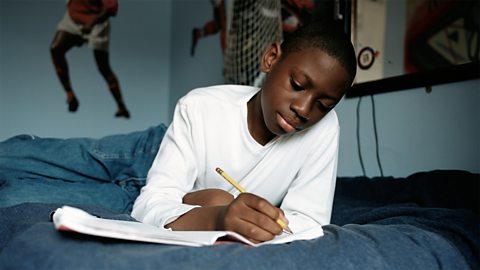
How to support your teen’s wellbeing during their GCSE revision
Bitesize Parenting caught up with Young Minds to get some top tips on supporting teens with their wellbeing this exam season.
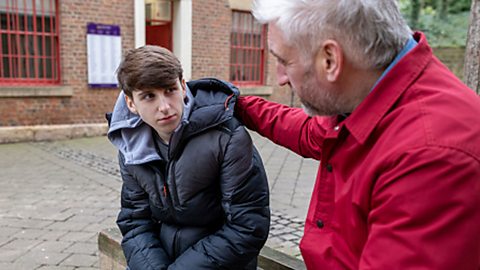
How to help your child with homework, and avoid a meltdown
Bitesize Parenting have some tips to you help your child with their homework and help avoid those dreaded homework meltdowns.