


The BBC Wildlife Fund support was used to help teach fishermen in the South Atlantic how to avoid catching seabirds in their fishing gear. Two task force instructors were employed for 18 months to work with fishing fleets off the coast of Brazil and South Africa, hotspots for albatross deaths.
Stories
Amur leopard and tiger

Phoenix Fund is a grassroots NGO fighting to protect far eastern Russia's last big cats through anti-poaching efforts and a strong education programme. The project aims to further strengthen Amur tiger/ leopard habitat protection through anti-poaching efforts and environmental education, but also to bolster local capacity for fire-fighting, as incidents of non-natural fires are increasing and are a major threat to the habitat of Amur tigers and leopard.
Coral reefs

The BBC Wildlife Fund provided grant support to this project in the Maldives, which aims to bring an end to fish blasting and to promote recovery of coral reefs that have been degraded or destroyed as a result of this practice. Project staff have worked with local communities to raise the awareness of the value to the local economy of pristine reef habitat to reduce the incidence of fish blasting. The project has also begun work to restore degraded reefs through seeded frames.
Fen raft spider

The Waveney Valley fen raft spider project aims to increase the number of wild populations of the fen raft spider through captive rearing and reintroduction. The new populations will deliver a key UK Biodiversity Action Plan (BAP) target for fen raft spiders and achieve the first step towards re-establishing connected populations within the Waveney Valley.
Kibale corridor

The objective is to recover the 400km≤ Kibale Corridor - encompassing nearly 25% of Queen Elizabeth Conservation Area - and in doing so protect a Ramsar* Site, Biosphere Reserve and a critical 'genetic' connection in Africa's largest and most biodiverse network of protected areas. The Corridor is the last existing area that can add to the highly pressured rangelands available to charismatic fauna in south western Uganda.
* a site recognised for its global importance for bird conservation.
Orang-utans
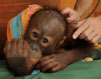
Based in Palangka Raya within the Central Kalimantan region of Indonesian Borneo the project is home to some 650 orang-utans, making it the largest primate rehabilitation centre in the world. The BBC Wildlife Fund grant helped in three key areas: helping to deliver education and raise awareness, allowing the project to bring local children to visit the centre and its work at least once a week; a programme that confiscates captive orang-utans; and helped pay for a much needed microbiology lab that is used to perform health checks on all apes that join the centre.
Sagalla caecilian

The project aims to improve environmental sustainability in the Eastern Arc Mountains through habitat restoration, soil conservation, water resources management, education and livelihood improvement of the local community to conserve the endemic critically endangered Sagalla caecilian.

