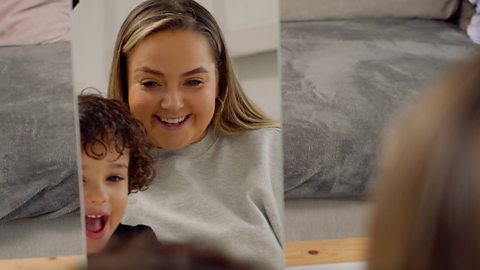
Responding to your baby’s needs around feeding, and knowing what to look for, is a great way to build a strong bond.
How does your baby tell you they’re hungry? What are the cues to look out for? And why is being responsive so important?
Watch the film below to find out…
What is responsive feeding?
Responsive feeding means feeding your baby or child based on their needs rather than a rigid time schedule.
This means responding to your baby’s feeding and comfort cues, as well as your own desire or need to feed your baby
Breastfeeding in a responsive way and responding to your baby’s needs, means that feeding is not just for food, but also for love, comfort and reassurance. This helps to build a strong emotional connection and bond between you and your baby.
Sarah Pickford from UNICEF, explains…
“Breastfed babies will feed because they're hungry, or perhaps they are feeling a bit anxious, maybe they're in a new environment, and it's noisy.
“Breastfeeding might be to comfort baby, to give them some reassurance.”
“But for Mum, she can fit feeding around her and her family's lifestyle. For example: breastfeeding before the school run, or going to the shops.
“She might also be feeling that her breasts are full and she needs to feed, or because she might be feeling low in mood. It's good for her mental health to breastfeed.”
How does your baby tell you they’re hungry and what are the cues to look out for?
In the film, lactation consultant Michelle Kuteyi explains that feeding cues are split into three areas – early, active and late cues.
Early cues
Gently stirring, whether they’re awake or asleep
Their head turning to one side
Opening their mouth or smacking their lips (rooting)
Active cues
Increased movement
Putting hands to mouth and sucking fingers
Increased lips smacking
Late cues
Crying
Needs calming
This is what Michelle describes as the ‘hangry’ stage!
Some babies will need to be calm to feed, so offering some skin-to-skin contact, like a cuddle, can reassure them.
The benefits of breastfeeding
As Michelle explains, breastfeeding can fulfil bonding, nutrition, hydration, comfort and protection needs for you and your baby.
UNICEF say that exclusive breastfeeding can also protect your baby from a range of illnesses like infections, diabetes, asthma, heart disease and obesity all the way into adulthood. It can also protect mothers from breast and ovarian cancers and heart disease.
There are developmental benefits too, particularly through skin-to-skin contact, explains Sarah from UNICEF…
“While they're feeding, there's all this oxytocin flowing around Mum and baby, and it supports baby's brain development.
“It’s supporting the changes that are happening in Mum's brain as well, post-delivery.”

When should I stop breastfeeding?
“The World Health Organization recommend that you breastfeed up to two years and beyond [alongside weaning after six months],” Sarah explains.
“Some babies stop at 18 months, a year, or even six months when they've started to introduce solids, they're thinking, ‘Oh great, I'm just going to eat food.’
“But other babies will just need that little bit of longer-term support – emotional, as well as the nutritional value.”
Bottle feeding and expressing
For bottle feeding, it’s important to know when your baby is ready using the same cues as breastfeeding.
Some families choose to combine breastfeeding with bottle feeding – there's the option of expressing your breast milk and giving it in a bottle should you wish to continue to exclusively breastfeed.
Michelle’s tips for bottle feeding
Sit your baby upright in a supported position cuddled in close to you
Hold the bottle in a horizontal position
Put the bottle teat to the top lip of your baby’s mouth
Your baby should open their mouth and latch, if they’re ready (be aware of yawning, as this can look similar and might not be the right time to give your baby the bottle)
Once the baby stops sucking or shows signs they want a break, like wriggling, putting their hands up, dribbling, or turning away, you can lower the bottle down
Try a little pause and perhaps some winding. Then you can try the bottle again, but if they don’t want any more, that’s okay.
They don’t need to finish the bottle!
Advice for parents-to-be who are thinking about their feeding choices
If you’re thinking about how you want to feed your child, Sarah has one piece of advice – talk to a professional, whether that’s a midwife, health visitor, or Family Hub staff.
They can talk to you about your individual circumstances and answer your questions.
This will ensure you have the time to be able to make an informed decision about how you feed your baby.
There’s lots more advice around feeding on the CBeebies Parenting website, from early feeding to weaning and easy family meals.