This series, first published in 2012, is for teachers and review is recommended before use in class.
A six part collection of clips that look at the challenges faced by scientists, engineers and doctors ahead of Felix Baumgartner's record-breaking and historic skydive in 2012.
Please note that Felix died in July, 2025, aged 56.
Students will be able to find out more about:
- Gravity, free fall, air resistance and terminal velocity
- Why a balloon was so important to Felix Baumgartner's Space jump
- How Felix Baumgartner's pressure suit and space capsule kept him alive
- The physics behind Felix Baumgartner’s epic free-fall and the challenges of working through the sound barrier
- The dangers of altitude
These clips are taken from the original BBC series, The Science of Space Dive
Suitable for: KS3 / GCSE in England, Wales and Northern Ireland and Third and Fourth Level in Scotland.
The Science of Space Dive (pt 1/6): The world's biggest skydive. video
An overview of challenges faced by scientists, engineers and doctors ahead of Felix Baumgartner's record-breaking and historic skydive
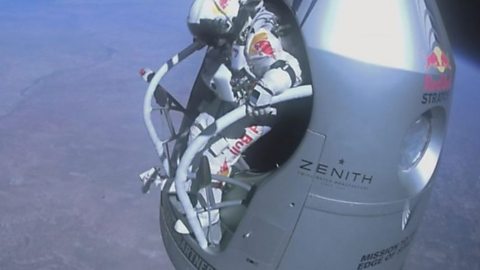
The Science of Space Dive (pt 2/6) - The balloon. video
To raise Felix 24 miles above the earth’s surface he flew the largest manned balloon ever.
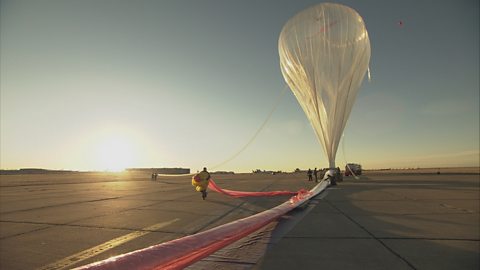
The Science of Space Dive (pt 3/6) - The pressure suit and space capsule. video
The important role of Felix Baumgartner's pressure suit and space capsule in his dive.
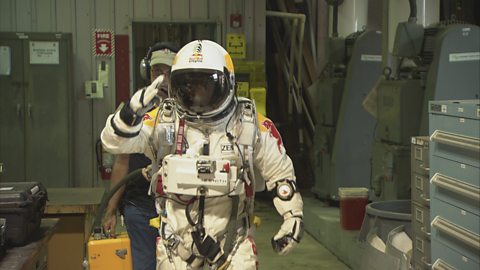
The Science of Space Dive (pt 4/6) - The dangers of altitude. video
In his ascent to 125,000ft Felix Baumgartner risked several life-threatening conditions.
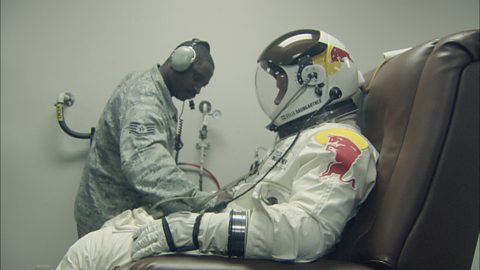
The Science of Space Dive (pt 5/6) - The physics of free-fall. video
Felix biggest fear was that as he fell he could become locked in a flat spin.
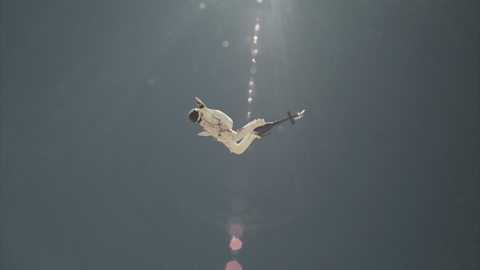
The Science of Space Dive (pt 6/6) - Free-falling through the sound barrier. video
On his record breaking free-fall Felix Baumgartner broke the sound barrier.

Where next?
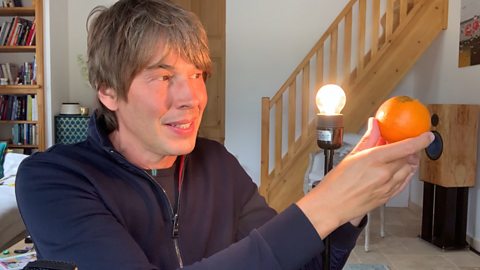
Physics with Professor Brian Cox - Space Science. collection
A series of short explainer films by Professor Brian Cox focused on space physics.
Bitesize: Black History Month collection
Use these Bitesize resources to set homework, independent study tasks or to consolidate learning for your pupils.

Newsround
The latest news stories from Newsround to share in the classroom.