In the Northern Hemisphere, the autumn equinox falls on September the 22nd or 23rd of September, marking the point where day and night are about the same length before the days begin to get shorter and nights longer.
All around us there are signs of the change in seasons, from the abundance of fresh fruit and vegetables as the harvest season peaks, to changes in the behaviour of animals as summer birds begin to migrate.
Here are five signs of seasonal change to look out for.
1. The changing colours
Autumn brings a riot of colours and changes as both animals and humans harvest food for the winter months.
Deciduous trees are losing their leaves and there are mass migrations of birds as summer visitors leave and others like geese arrive from colder countries to overwinter in the UK.
It's also the time for the festivals of Halloween and Bonfire Night with their historical roots.
2. It's the time for harvest festivals
The harvest season has been underway for some time but the autumn equinox is the traditional time for festivities celebrating the bringing in of produce from the land.
In the UK the days of armies of people from local communities working in the fields have disappeared, although it was a regular feature of rural life up to the 1950s.
The development of the combine harvester has done away with the need for mass manual labour and increased the size of fields.
3. The Earth is tilting on its axis
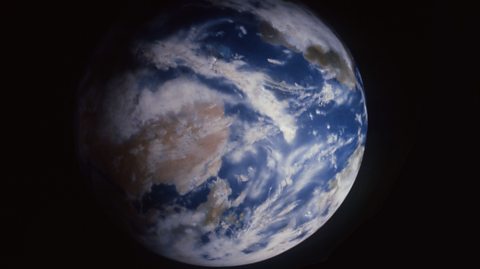
Coming from Latin, the word 'equinox' translates as 'equal night' and marks the point at which the Earth is experiencing the same length of day and night, about 12 hours each.
The Earth is tilted on its axis at an average of 23.5 degrees but, at the equinox, the tilt is perpendicular to that of the sun's rays, resulting in the 12 hours of day and 12 hours of night.
In the Northern hemisphere it means winter is coming.
From BBC Weather.
4. It is also autumn on other planets
Technically the planets in our solar system have seasons too, though the impact on climate is not the same as on Earth, as they don't have the same axis tilt.
Seasons can also have different lengths. Neptune's last autumn began in 1962 and ended in 2003.
Brian Cox explains how the orbit of planets in the solar system differ widely.
5. It could be a great time to spot the Northern Lights
Autumn can be one of the best times of the year to see the Northern Lights, also known as Aurora Borealis.
The longer nights, and chances of clear skies, means the natural display of colour and light can be visible in areas across the UK.
The best sightings are normally in northern Scotland but they have been seen much further south.
In November 2017 there were some spectacular images taken of the sky across Scotland.
Helen Czerski describes how the natural phenomenon, which is focused on the North and South poles, are created.
