Summary

  • The US and Saudi Arabia are expected to announce a deal that will allow the Gulf kingdom to develop a civilian nuclear programme

  • An announcement is expected from US President Donald Trump's administration on Wednesday, according to CBS News, the BBC's US partner

  • The deal would allow US companies to run nuclear power for the Saudis on Saudi soil for civilian purposes, CBS reports, and may give the Saudis the ability to enrich their own fuel for nuclear reactors

  • Nuclear experts and former officials in Israel - the US's top ally in the Middle East - have voiced concern such an agreement could lead to Saudi Arabia being able to develop a nuclear weapon

  • The deal, which was first reported by the Wall Street Journal, would last 30 years, the newspaper said

  1. A brief timeline of US-Saudi Arabia talks on nuclear powerpublished at 17:05 BST
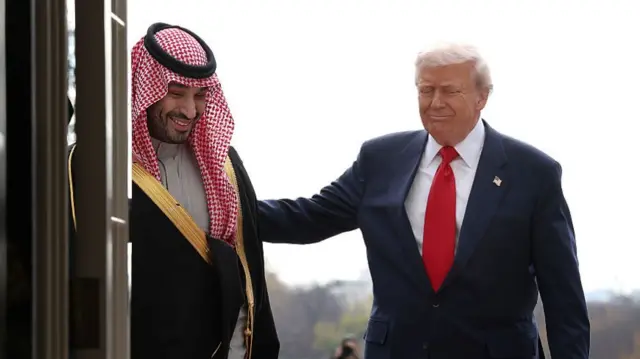
    President Donald Trump (R) welcomes Crown Prince and Prime Minister Mohammed bin Salman of Saudi Arabia during an arrival ceremony at the White House on November 18, 2025Image source, Getty Images

    Talks on the United States and Saudi Arabia co-operating on a civil nuclear programme go back as far as 2008.

    Under the Bush administration, the two countries signed a nonbinding memorandum of understanding (MoU), with the US saying it would assist the Gulf kingdom to develop civilian nuclear energy but that Saudi Arabia has stated it intended to import nuclear fuel and would not pursue "sensitive nuclear technologies".

    Here's some of the key milestones since then:

    • From 2017 to 2019, the US granted seven American companies authorisation to engage in "civil nuclear discussions" with Saudi Arabia
    • However, in 2020 the US Government Accountability Office reported that the two nations had "not made significant progress" due to "persistent differences" over conditions including restrictions on enrichment
    • In 2022, the US and Saudi signed a new MoU on "the exchange of technical information and cooperation in nuclear safety matters"
    • In 2023, the Wall Street Journal reported that the US was considering a US-run uranium enrichment operation within Saudi Arabia
    • In November 2025, the US and Saudi Arabia signed a joint declaration which the Trump administration said "builds the legal foundation for a decades-long, multi-billion-dollar nuclear energy partnership"

  2. Unlike UAE agreement, Saudi Arabia deal may allow it to enrich uranium itself - reportspublished at 16:29 BST

    One of the key points of the deal, according to reports in US media, is that Saudi Arabia may be allowed to enrich uranium itself rather than relying on imported fuel.

    This would reportedly take place at a US-built uranium enrichment facility within Saudi Arabia, and stands out as a key difference compared to the US's nuclear deal with the United Arab Emirates.

    Under this 2009 agreement, the UAE does not produce its own fuel and also faces a number of other restrictions.

  3. US and Saudi Arabia set to announce agreement on nuclear power dealpublished at 16:20 BST

    Washington and Riyadh are set to announce they have reached a deal that would see Saudi Arabia able to develop nuclear power for the first time.

    The two countries have reached a commercial agreement for US companies to run nuclear power plants on Saudi Arabian soil, a regional official familiar with the agreement told the BBC's US partner, CBS News.

    An official announcement is expected later today.

    The deal may allow the Saudis to enrich their own fuel for nuclear reactors, CBS reports.

    The companies involved have not yet been disclosed, but Congress would need to be consulted, according to CBS.

    The BBC has asked the White House for comment.