Summary

  • Keir Starmer says under-16s will be banned from social media by spring 2027 - key points from the announcement

  • Snapchat, TikTok, YouTube, Instagram, Facebook and X are among the platforms affected - but not WhatsApp and Signal, the government says

  • "A full ban is the right choice... I am not prepared to compromise on the safety and happiness of our children," Starmer says in a televised statement

  • Louise Gibson, the mother of 11-year-old Noah who is alleged to have died after attempting an online challenge, says "this is right for children and it's right for parents" - here's what other bereaved families told the BBC

  • As well as the ban, the government says it will block "harmful functions such as livestreaming" and is looking into potential overnight curfews

  • In Australia, which became the first country in the world to introduce a similar ban in December, our reporter says teenagers are managing to bypass age restriction systems

  1. BBC Verify

    Do nine in 10 parents support a ban on social media for under-16s?published at 10:44 BST

    By Daniel Wainwright

    The government says “nine, external in 10 parents, external” support a social media ban for children under 16, citing responses to a consultation.

    But the figure does not mean 90% of all UK parents.

    It comes from the 9,499 parents and carers who chose to answer a government consultation question asking whether they supported a legal minimum age for social media access.

    Of those, 89% said yes.

    In a follow-up question to those who supported a minimum age, 88% strongly agreed it should be at least 16 while 8% somewhat agreed.

    The government’s own notes say the consultation, external was a “self-selecting sample” meaning it was open to anyone and reflects people motivated to respond rather than a representative national picture.

    Separate YouGov polling suggests broad support - but lower than the government’s headline figure: 77% of parents backed a ban.

    Parents were also split on whether it would work with 45% of those surveyed by YouGov saying it would be effective and 46% disagreeing.
  2. Ban could drive children to 'darker corners of the internet'published at 10:34 BST

    Emmet McElhatten
    BBC News Northern Ireland

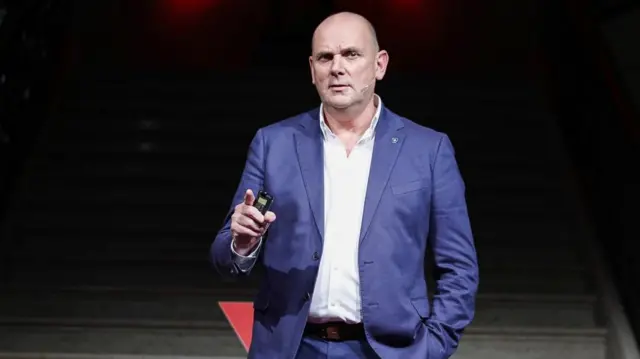
    Jim Gamble, an older white man in a blue suit and white shirt speaking on stage.Image source, INEQE

    Jim Gamble, founding chief executive of the Child Exploitation and Online Protection Centre, says he does "not know any social media expert" who thinks "a blanket ban" is going to work.

    Gamble says the ban is "much more complex and nuanced than the prime minister is making out".

    Gamble tells BBC Radio Ulster Good Morning Ulster there are "easy workarounds" for young people set on staying on social media.

    "Many (Australians) bypassed restrictions using virtual private networks. They circumvented them by submitting fake IDs or altering their appearance to trick AI (artificial intelligence) age estimation," he adds.

    Gamble said the ban in Australia has driven young people to "darker corners" of the internet.

    "If you actually look at the statistics, it's a double-edged sword because the internet does as much good.

    "For isolated, alienated children, for children with neurodiversity, with children exploring different aspects of their young lives, it's a space and place where they can build positive networks."

  3. Still unclear what ban could mean for video gamespublished at 10:30 BST

    Tom Richardson
    Newsbeat

    Keir Starmer says the new social media ban will extend to gaming platforms, but it's not entirely clear what it will mean for players.

    Some online games, especially Roblox, have gained bad press over cases where predators have targeted children.

    But for millions of young people multiplayer games can function as a social hangout space, and many will tell you they mainly communicate with people they already know.

    The biggest games companies already offer parents control over the use of messaging functions, giving them the ability to place limits on who can contact their child - although the effectiveness of these measures has been questioned.

    The government's new rules also mention livestreaming.

    This could, in theory, affect platforms such as Twitch, which was included in Australia's social media ban last year.

    Currently under-18s are able to broadcast on the Amazon-owned site with permission of a parent or guardian, and for a lucky few it can be a way to make money and launch a career.

    There's also a question of enforcement. Players often prefer to use third-party apps such as Discord over built-in messaging apps - and there's a question over whether these will be exempt from the new rules.

    Will this tech-savvy audience find ways around the new ban before it's even been launched?

  4. 'Annoyed and disappointed' or 'time they did something': How some under-16s are reactingpublished at 10:22 BST

    Nina Blissett
    Newsround reporter

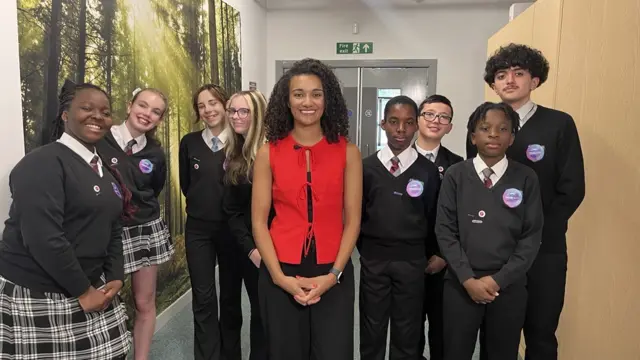
    A woman stands with schoolchildren.
    Image caption,

    BBC's Nina Blissett with pupils at a high school in Wythenshawe

    It’s a mixed reaction here at a high school in Wythenshawe.

    I was with Year 8 and 9 pupils as they watched the announcement from Prime Minister Keir Starmer. Some were happy with a social media ban coming into force, others had their heads in their hands.

    Sean, 13, doesn’t have social media and is feeling good about the ban.

    "It’s time they did something about it. Many use [social media] for bad and good things, but at this point in time it’s a bad place."

    Riley, 13, uses mostly YouTube and WhatsApp and isn’t very happy. He feels that the government hasn’t looked at the bigger picture of people who would struggle with the ban.

    As a reminder, WhatsApp is not included in the ban.

    "There is a lot of people with neurodivergence," says Riley. "We need it to recuperate when we are burned out."

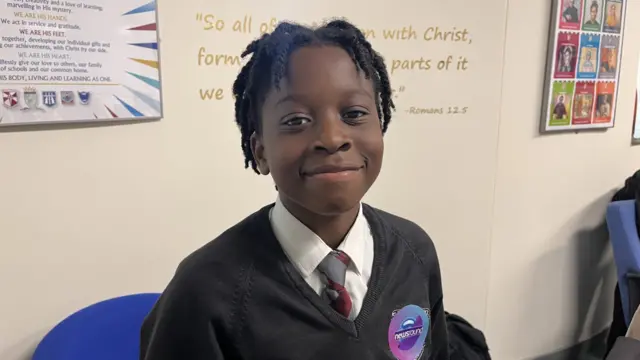
    Isaac says that he's: "Annoyed and disappointed in this decision, because they’re not trying to make it better or safer - instead they are gonna wipe it out completely."

    "I think there should be more restriction and parental guidance on the accounts, but not a ban."

    A child in school uniform pictured smiling in a classroom
    Image caption,

    Isaac says other measures could have been enforced rather than an outright ban

  5. Snapchat says a ban could push young people to 'less safe platforms'published at 10:19 BST

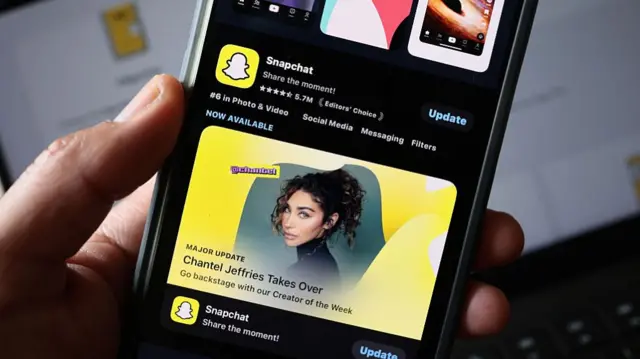
    A phone screen showing Snapchat in the App StoreImage source, Getty Images

    A Snapchat spokesperson says a ban on its platform could push young people onto "less safe platforms".

    The popular social media and messaging app would be banned for under-16s under Starmer's plans.

    But it says that the majority of time spent on Snapchat is in "private messaging between friends and family".

    "An outright ban that disconnects teens from those relationships doesn't make them safer - it may simply push them to less safe platforms," a spokesperson says.

    It adds that it has long supported "thoughtful and proportionate regulation" and shares the government's aim to protect young people from online harm - and that it is "vital" that the government now "carefully considers" how a ban would be applied.

    Messaging services like WhatsApp and Signal would not be included in the social media ban.

  6. Lib Dems criticise ban as ‘hodgepodge’ of restrictionspublished at 10:16 BST

    The Liberal Democrats have criticised the government’s plans for a social media ban, complaining that, “after months of delay, the government have cobbled together a hodgepodge of social media restrictions which don't keep children safe, nor hold big tech's feet to the fire.”

    The party says it wants the UK to challenge big tech companies with what it calls a “credible set of measures that genuinely protects our children, rather than rushing through a half-baked policy just to secure a political legacy.”

    In a statement, the Lib Dems say they support the many families “crying out for action against harmful content and addictive algorithms, adding: “We will keep fighting their corner”.

    For context, the party earlier this year proposed introducing film-style age ratings to limit which social media apps children can access.

    Under its plan, platforms that use addictive algorithmic feeds or host "inappropriate content" would be restricted to users over 16 years old, while sites with "graphic violence or pornography" would be rated 18-plus.

  7. Analysis

    Ban is big shift in government policypublished at 10:14 BST

    Henry Zeffman
    Chief political correspondent

    This is a massive shift in policy for British society, enabled by a staggeringly quick shift in the government’s position.

    It is only at the start of this year that the Conservatives were pushing for an Australian-style ban, joined by the Liberal Democrats and several dozen Labour MPs, but initially met resistance from Keir Starmer.

    So there is a measure of cynicism around today about this decision. But it’s been clear for some time that politicians’ minds have shifted rapidly on this, just as has been true in much of society.

    Those who know his mind say the prime minister has been moved by the meetings he’s had with those who have been affected by these issues.

  8. Increased protections welcomed by children's charitiespublished at 10:07 BST

    Reaction is coming in to Starmer's ban on under-16s accessing social media, and we'll bring all fresh lines as we get them.

    Lynn Perry, chief executive of children's charity Barnado's, says "social media companies have failed children", and that she hears every day the impact of children seeing "violent and harmful content" online.

    Perry adds that social media companies should take responsibility for keeping their platforms safe.

    "It is not, and has never been, children's job to keep themselves safe," she says.

    Chris Sherwood, the CEO of the National Society for the Prevention of Cruelty to Children (NSPCC), says today is a "watershed moment for child protection" - but that robust age checks and effective enforcement is needed to deliver on this ambition so that children don't "slip through the net".

    The children's commissioner for Wales, Rocio Cifuentes, says that while she welcomes any greater protections, she didn't think "a ban was the answer".

    Cifuentes tells BBC Radio Wales that the question should have been "how can we make the internet and social media safer for everyone, including children?" - adding that the focus should be on "stronger enforcement" and "far stronger accountability" on social media companies.

  9. Social media ban: Key changes announced for under-16s and under-18spublished at 10:01 BST

    Here's a quick digest of the main changes announced by the government this morning:

    Which platforms will be banned for under-16s?

    Platforms like Snapchat, TikTok, YouTube, Instagram, Facebook and X are in scope, the government says. Messaging services like WhatsApp and Signal are not.

    When will the ban kick in?

    The government says legislation is expected to be brought to Parliament before Christmas, with rules expected to come into force in Spring 2027.

    How are the UK rules different to elsewhere?

    The government says it will "go further than any other country", with its policy also including blocks on livestreaming and stranger communication for under-16s. Gaming sites will also be impacted, it says.

    Are under-18s impacted?

    Restrictions on livestreaming and stranger communication will also be on "by default" for 16 and 17-year-olds "to prevent a cliff-edge at 16", the government says. It's also looking at overnight curfews and breaks in infinite scrolling for this age group, and will set out more details in July.

    Chatbot restrictions

    A minimum age of 18 will be enforced on "romantic companion" chatbots, designed to simulate sexual relationships or roleplay with users. Other chatbots will need to apply similar restrictions on "intimate functionalities", the government says.

  10. Bereaved parents react to ban announcementpublished at 09:54 BST

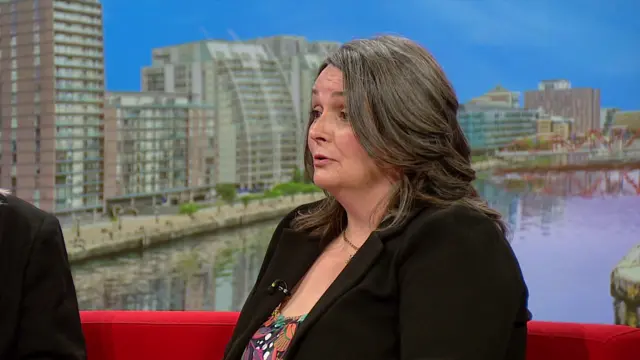
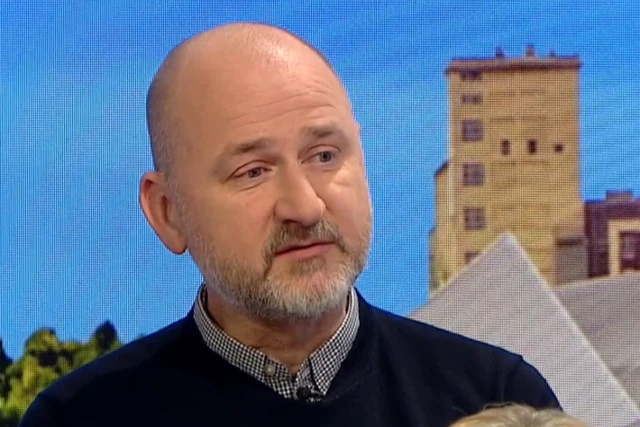
    A little earlier a panel of bereaved families were invited to watch the prime minister's announcement in the BBC Breakfast studio.

    Watch the video above as the parents introduce their children and give their reaction to the social media ban.

  11. In Australia, little has changed six months onpublished at 09:50 BST

    Tiffanie Turnbull
    BBC News

    Australia's world-leading social media ban for under-16s came into effect in December, to global fanfare.

    Kids told us then it took them less than five minutes to outsmart the age checks being relied on to enforce it.

    More than six months on, implementing this policy remains incredibly difficult.

    One student told us recently that in her grade of more than 170 students, she knew of only three who had been booted off social media.

    And 70% of parents have told the Australia's internet regulator their children were still on these platforms, a recent survey found.

    Almost five million accounts had been deactivated by the tech firms as of January, but a “substantial proportion” of under-16s in the country either kept their profiles, managed to create new ones or have bypassed age gating systems.

    No fines have been handed out yet - but the eSafety Commission says it is investigating potential non-compliance by Facebook, Instagram, Snapchat, TikTok and YouTube and will have an update on those probes shortly.

  12. Australia PM congratulates UK on 'important step'published at 09:47 BST

    Australia introduced its social media ban in December and this morning Prime Minister Anthony Albanese lauded Keir Starmer for following suit, in a post on X.

    "Social media giants operate across borders. By standing together, we can do more to hold them accountable and keep children safe online."

  13. Which other countries have implemented bans?published at 09:44 BST

    Joe Tidy
    Cyber correspondent

    According to the Organisation for Economic Co-operation and Development (OECD) 25 countries now have social media age restrictions in force, enacted, or under active consideration.

    The OECD research was published in April so the number may well have gone up as the policy has continued to spread since 2023 as it became a major talking point.

    Australia was the first country to ban social media for under 16s with the law coming into effect in December last year.

    Spain and Portugal seem to be the next in line with politicians announcing plans and partly voting the rules in.

    Bans are likely to come into force this year.

    Governments in France, Malaysia, Denmark, Indonesia, Norway and Canada are also in the process of bringing in a ban.

    Laws have also been passed in several US states but are being challenged in the courts.

    Most countries have settled on 16 being the age to allow children on social platforms but some, including Denmark, are using 15 as the bar.

  14. Bereaved mother says UK's online safety regulation can be 'world-leading'published at 09:38 BST

    Louise Gibson, who believes her 11-year-old son Noah died while attempting an online 'blackout challenge', says the UK should "lead" and "show other countries... what can be done".

    She says the UK should "get the restrictions in place" and "tighten the algorithms".

    "It would be great to be world-leading on this front", she says, adding she feels "fairly confident" the ban will improve the situation.

    Louise Gibson in a black blazer with a colourful top in the BBC Breakfast studio
    Image caption,

    Louise Gibson feels "fairly confident" now the ban has been announced

  15. 'Bring it on' says bereaved father to YouTubepublished at 09:35 BST

    Mark, speaking about his son Murray who died aged 16 in December 2023 after being blackmailed
    Image caption,

    Mark, speaking about his son Murray who died aged 16 in December 2023 after being blackmailed

    Mark Dowey, whose son Murray died after being blackmailed by sextortion, says he was previously "on the fence" about a social media ban, but thinks it will be a "positive thing".

    Appearing on BBC Breakfast, he says he was impressed by the prime minister's "powerful" speech.

    "I'm hopeful it will be substantive and it will deliver some real change on the ground".

    He agrees with the prime minister about how teenagers can get around things, but remains "hopeful" that it will get to a point where it "starts to make a real societal change".

    In response to YouTube saying that any UK social media ban could push children to less safe services, he says:

    "If that's the best they've got then I think they're in trouble, I think they're basically acknowledging they don't have a reasonable position here. To say something like that is unfortunate, if that's the best they've got then bring it on."

  16. Analysis

    Social media will become a very different landscape when this ban comes into forcepublished at 09:31 BST

    Zoe Kleinman
    Technology editor

    I have just left the briefing at Number 10 where I sat directly behind campaigners who have fought for years to see children banned from social media.

    I took their photo outside the famous front door beforehand and they were jubilant.

    They clapped and cheered when the PM announced it; but there are many missing details, including a definitive list of banned platforms and how it will actually work.

    The PM compared it several times with laws around drinking alcohol and how some teenagers get around that too: I left the briefing to a bunch of messages from critics saying this misses the point about driving children to darker corners of the internet as they seek alternatives.

    He also alluded to additional measures aimed at under 18s as well - make no mistake, social media will become a very different landscape when this ban comes into force in the spring.

    As other countries like Canada go down the same path, children are going to have to find other things to do. And the PM has to hope they will be wholesome activities.

  17. Ofcom 'ready to work closely' with government on measurespublished at 09:29 BST

    Ofcom says it is ready to work with the government to "build on this progress with new measures to protect children".

    In a statement released after the announcement, it says Ofcom, which regulates the communications services, has driven "some of the strongest changes" for online safety regulation and is ready to work closely with the government.

  18. Tech companies had countless opportunities to keep children safe, says technology secretarypublished at 09:25 BST

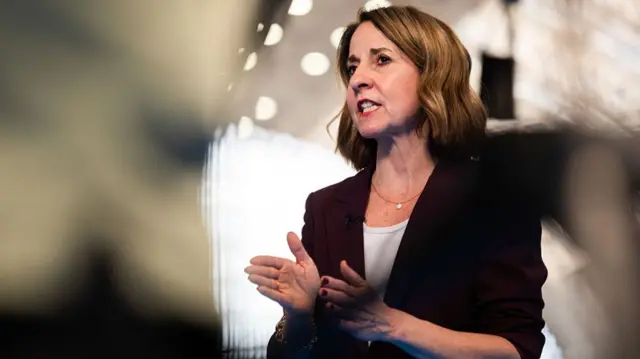
    Liz Kendall speaking at an eventImage source, Bloomberg via Getty Images

    Today's ban is a "bold" step towards "creating a safer, healthier life online" for children and future generations, technology secretary Liz Kendall said.

    "Tech companies have had countless opportunities to keep children safe, yet they have failed to act. That is why we are a taking power away from the tech giants and putting it back in parents’ hands," she said in a written press release that came alongside the announcement.

    "My driving force has always been to give every child, from every background, the best possible start in life," she said. "That is what these regulations will deliver."

  19. Ban is 'well-intentioned' but unlikely to work, says Faragepublished at 09:22 BST

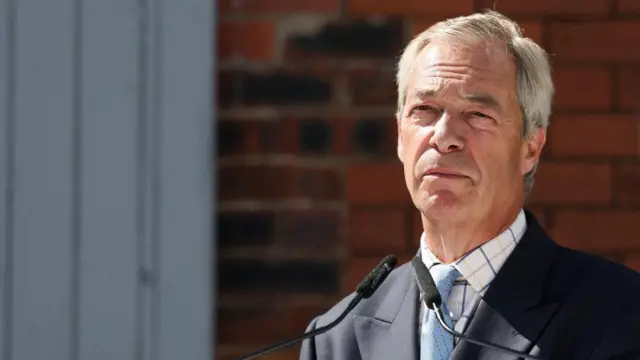
    Nigel Farage looking outward at the camera while speaking at a news conferenceImage source, Reuters

    Reform UK leader Nigel Farage says the ban is "well-intentioned" but "unlikely to work" given the popularity of Virtual Private Networks (VPNs).

    VPNs allow users to have a private, secure internet connection that could bypass age-checks by hiding your location and identity.

    He claims that age-verification checks will lead to "the introduction of digital ID via the back door".

    The answer, Farage says, is "handsets for children with limited features".

  20. Badenoch: Social media ban is 'fantastic news'published at 09:20 BST

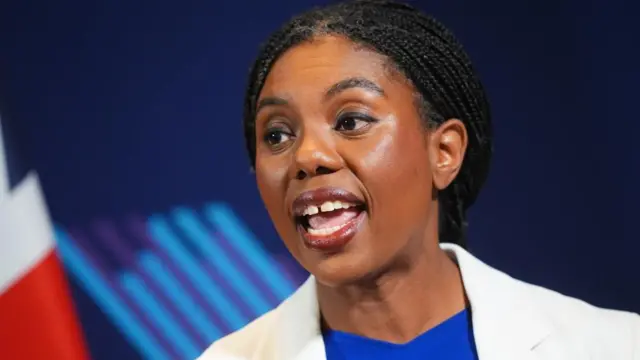
    A photo of Kemi Badenoch speaking in at a news conferenceImage source, PA Media

    Conservative leader Kemi Badenoch has welcomed plans to ban under-16s from social media.

    "It is fantastic news that the Government has finally woken up to the dangers of social media for young people. This is an important step in helping parents protect childhood for children," she writes in a post on X.

    She says that the Tories "welcome this latest Labour U-turn" and adds that they will work for the "best implementation of the policy".