The heartbeat of a community
In Kenya’s largest informal settlement we are supporting community radio to bring trustworthy information to its listeners
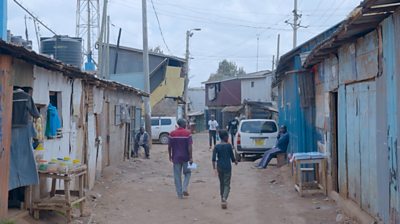
For nearly 18 years, Philip Muhatia and his team of 16 journalists, presenters and editors at Pamoja FM have greeted the residents of Kibra informal settlement, south of Nairobi, each morning with live talk shows, music and information on the issues they care about most.
Kibra is the largest informal settlement in Kenya, and one of the largest in Africa. With an estimated population of 250,000 – and some estimates much higher – it is a sprawling and colourful series of communities: closely-set mud and corrugated metal homes interspersed with lively markets, entrepreneurship at every turn. Muslim refugees who have fled conflict in Sudan live alongside economic and climate migrants from western Kenya, and churches of every kind. It’s an opposition stronghold where protests are common. Countless INGOs are here, too, trying to address poor water and sanitation, high levels of gender-based violence, land rights and many other issues.
Pamoja FM – the name means ‘Together’ in Swahili - is the voice of this community, covering elections and human rights issues along with news, weather and sports, and inspiring stories from Kibra residents. At least 10 of its 16 staff have grown up in Kibra, as the station prioritises jobs for local young people; during a recent visit, a student on attachment says she’s just begun her third month at the station.
Founded in 2007 and supported by multiple donors through the years, Pamoja FM has evolved into a must-listen voice in Kibra, reaching an estimated 600,000 listeners within its 5-km transmission radius.
Philip is proud of the content guidelines and editorial standards and principles pinned to the wall in their small newsroom, developed with support from BBC Media Action.
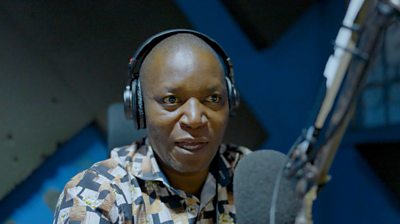
We have worked with BBC Media Action for quite a long time. They are a very good partner,” he said. “BBC Media Action has been able to train us. Personally, as a manager, I also trained with BBC Media Action. And now what is the advantage? It is because whenever I'm speaking about or whenever I'm also directing people to do something, I personally should be an example. And to be an example, I must be informed.”
Pamoja FM has strong ties to the BBC – from its BBC Media Action mentors and support for equipment and programme creation, to a partnership arrangement that allows BBC World Service to air on its channel overnight and the BBC Swahili newscast to air each morning.
In recent months, they’ve tackled a new topic: the impacts of extreme weather and a changing climate on settlement dwellers. The Nairobi River meanders through a corner of the settlement; in the dry season, it is choked by rubbish, human and animal waste, and silt. But during increasingly unpredictable rains and flash flooding, this mild-mannered creek becomes a rushing torrent, spilling over its banks, flooding streets and homes, and even swallowing up some of the precariously perched corrugated metal dwellings alongside.
BBC Media Action is supporting Pamoja FM with a weekly climate programme as well as regular weather updates – linking their journalists up with the Kenyan Met Office and climate scientists, and experts with the community, to explain concepts like probability in forecasting and help simplify technical jargon. Listening groups also critique the programming, sharing what they find most interesting and what issues they want to hear more about.
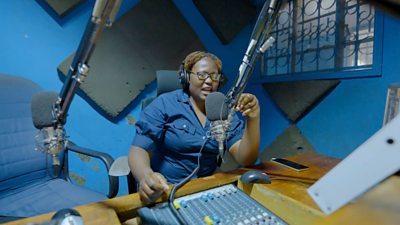
People trust Pamoja so much in that what you say when what you do and what you feed them is what they'll follow. If I go on air now and tell Kibra people that - this is just an example - that we must evacuate Kibra tomorrow, you know they'll start packing because they trust Pamoja that much,” says Ayumah Phomie, better known to her team as Fomi, who presents a morning breakfast show, an evening programme for young people, and a regular weather and climate programme – ‘Weather Mtaani’, or weather community.
“When I joined, I knew nothing about weather information. If you could even ask me what is the weather update today? I couldn't tell you,” she laughs. “But through BBC Media Action, and the Bridges Project, they have helped me understand terms about weather. They have helped me to be learning. Every day is a learning day. They give us mentors. It helps you to plan your work and work smart.”
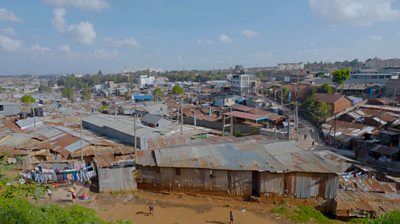
She says the work she does is increasingly important to people’s everyday lives.
“Informal settlements here in Kenya, they are prone to disasters be it drought or, or floods. Like for example here in Kibra … [in] late 2023, there were floods. More people were affected and more people died, lost their belongings. And that only happened because they had no information. So now because we have the chance to inform these people through BBC Media Action, and the Bridges Project, we are helping them plan and take action.”
Among her devoted listeners is Julius Ihachi Chyamola, a grandfather who has been tuning in for more than a decade and is a regular caller to the station’s discussion programmes. A small shop owner who came to Kibra to earn a living from western Kenya, he says his home has been affected many times by flooding that has swept through the settlement; now, he says, he takes the radio presenters’ advice to clear nearby drains of blockages, repair any leaks in his roof, and to protect his belongings ahead of expected heavy rains.
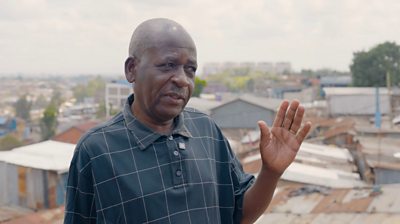
The station gives us prompt information of what is happening on the ground and it is very timely and it gives us the information in a very simple language that we understand,” he said. “These programmes are really helping me that initially I would find just water in my house. But nowadays when I listen to this programme, I am able to prepare myself, whenever I hear there might be bad flooding. Since I started listening to Pamoja FM I've never had that flooding actually coming into my house,” he said.
While the climate programmes are popular, the support for Pamoja’s team is wider-ranging. Over the years, BBC Media Action mentors have supported Pamoja’s journalists and presenters on topics including voting and civic participation, gender rights and youth engagement.
In 2023, the station covered Nairobi’s mass Generation Z protests, sparked by a finance bill proposing major tax increases. Kenyan forces fired on the crowds and killed at least 19 people in Nairobi.
But during this tense time, Pamoja’s journalists moved in the crowds in Kibra without harm – their faces and voices familiar to the community.
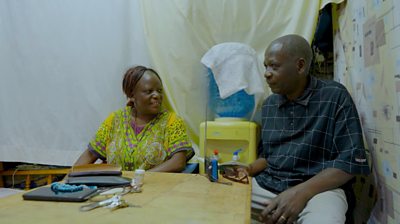
Whenever we want to cover any information, even in election years, we do not find any difficulty. Why? Because of the good understanding between the radio station and the people of Kibra, One, they have confidence in us. Two, you know, they see us to be part of their own. So when we want to get information, we have no problem,” Philip says.
Julius, whose children and grandchildren also listen to Pamoja, is a firm supporter.
“This community will not survive without Pamoja. Because Pamoja has given them a platform. They will discuss issues that others would not want to discuss,” he said. “Because Pamoja FM, they are not actually wanting to make profit but want to give us information.”
Our impact areas
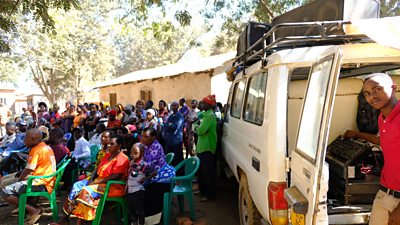
Building stronger democracies
We strengthen democracy by supporting public interest media content and platforms that enable vulnerable people to participate in democratic processes as active and informed citizens who are better able to understand and address the biggest challenges they and the world are facing.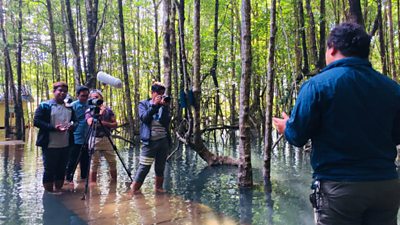
A safer, more habitable planet
We contribute to a safer and more habitable planet by providing an information lifeline in humanitarian emergencies, by supporting information flows that help people adapt to climate change, live sustainable lifestyles and protect nature, and by supporting balanced discussion of conflict and division.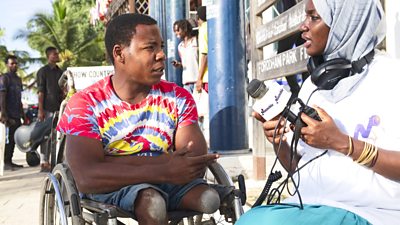
More inclusive societies
By ensuring everyone has access to trustworthy information and fair representation, our work supports the UN SDG commitment to “leave no one behind”. We meaningfully include people who are often marginalised or excluded in society; addressing gender norms and barriers, the rights of people with disabilities and of LGBTQI+ communities, improving access to health, education and work opportunities.
Latest news from Kenya
Search by Tag:
- Tagged with KenyaKenya
- Tagged with Media developmentMedia development
- Tagged with Climate ActionClimate Action
