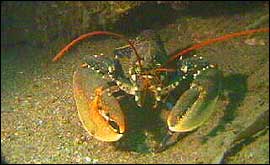
Sea life is flourishing since people were banned from catching fish, lobsters and crabs from an area east of Lundy Island.
The zone was proposed by the Devon Sea Fisheries Committee and English Nature to alleviate pressure on fish and shellfish stocks and restore wildlife. Chris Davis, English Nature's marine conservation officer, said the results, after just 18 months, were surprising. "We didn't think we would see a difference this early on," he said. "We thought it would take three to five years - that is certainly what was estimated by the experts." The zone, the first of its kind in the UK, was introduced to try to reverse the problems caused by over-fishing, which has depleted stocks in the oceans.
 | | Lundy is England's only marine nature reserve. |
The draft report by conservation scientists shows there are now three times as many lobsters inside the 'no catch zone' compared to other areas where fishing continues. But the full effects of the zone will not be known for another four years. Mr Davis said: "We have seen a threefold increase in the numbers of landable lobsters within the 'no take zone' compared to the control sites outside the zone. "This is the first time we have seen this striking difference in the lobster stocks. What we hope now is that not only do the populations in the 'no take zone' continue to increase, but that they migrate outside of the zone to the benefit of local fishermen.
Mr Davis said there was evidence of stocks improving outside 'no take zones' where the scheme had been tried in other parts of the world.
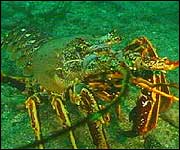 | | The 'no take' zone is already reaping rewards. |
He said: "Some of the evidence coming back from New Zealand and America shows stocks can increase outside the 'no take zone'. "What we need now is evidence from the UK and that's why we have put in this detailed monitoring programme on Lundy.
" The results are starting to show similar effects to what is being seen around the world." Shaun Davison, a lobster and crab fisherman from Ilfracombe, said he welcomed the initial results of the scheme. He said: "We originally found the 'no take zone' difficult because we did fish the area in question, but on what I have heard of these results it's great news. "If it's increasing lobster stocks I am all for it." Lundy Island lies 12 miles (19 kilometres) north of the Devon coast in the Bristol Channel and is England's only marine nature reserve. It is also a designated European Special Area of Conservation and its features include reefs, sea caves, sub-tidal sandbanks, grey seals and sponges. Article first published: 14th October 2004
|