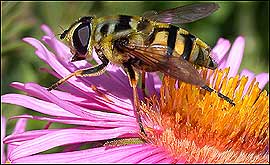
|  | Do you get a buzz out of helping Devon's wildlife? If so, you can play your part in discovering if an important part of our eco-system is doing well - or is in decline.
The RSPB's big bug watch is a count with a difference - because you'll need a 'splatometer' to count the number of splatted bugs on your car number plate after a journey!
The insects provide the food for bird species, and without the bugs, our feathered friends struggle to survive.
 | | A spotted flycatcher enjoys a meal |
Among the birds which rely on insects are insect hunters such as swallows, house martins, the spotted flycatcher and house sparrows, who have declined by two-thirds in the last 25 years.
The bugs also pollinate wild flowers, so it's important to know the extent of their decline.
It's believed their numbers have been affected by habitat loss and pollution.
How you can help
The Royal Society for the Protection of Birds is asking motorists to use a special splatometer, which is downloadable from the RSPB's website - linked from the left of this page.
First of all, clean your number plate. Then, after your journey - preferably 20 to 80 miles - place the splatometer over the middle section of the plate and estimate the total number of insects in the grid.
 | | A swallow on his lofty perch |
It's best to do the count in dry weather, but it doesn't matter if it's day or night. Try to make a mental note of the road classes used in the journey.
Then send the details to the RSPB using the form on their website.
The society is particularly keen to know of cases where there are no splats at all.
Amazingly, despite the importance of insects, there has been little previous monitoring or study of their numbers - just anecdotal evidence of a decline.
The count is taking place on 1st - 30th of June and the results of the survey will be released once all the information has been analysed.
Article written on 28th May 2004
|