BBC HomeExplore the BBC
This page has been archived and is no longer updated. Find out more about page archiving.

24 September 2014
DevonDevon

BBC Homepage
ยปBBC Local
Devon
Things to do
People & Places
Nature
History
Religion & Ethics
Arts and Culture
BBC Introducing
TV & Radio

Sites near Devon

Cornwall
Dorset
Somerset

Related BBC Sites

England

Contact Us


December 2003
Success for Lyme Bay Nursery Scheme
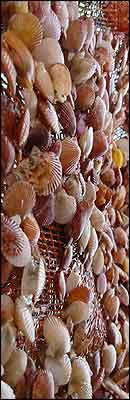
A handful of scallops
A marine nursery set up by the Devon Wildlife Trust to collect juvenile scallops has been a resounding success.
The aim of the trial project is to help Lyme Bay fishermen make a living by using the scallops to increase stocks in parts of the bay.
FACTS

Although scallops spend most of their life on the seabed, when they are first born they float around near the surface. The embryonic scallops, called spat, attach themselves to the net bags.

Lyme Bay reefs are cold water coral reefs composed of species like the nationally-protected pink sea fan. They shelter dozens of marine species.

A Devon Wildlife Trust sonar and video survey in the autumn revealed underwater fields of coral and starfish in areas of Lyme Bay which had been partially damaged by dredging.
More

SEE ALSO
Nature Index

Great Outdoors Index


Lyme Bay Coral


Jurassic Coast


WEB LINKS

Devon Wildlife Trust

English Nature

Defra
The BBC is not responsible for the content of external websites.

PRINT THIS PAGE
View print friendly version of this page..
get in contact
Scallops in nets

The scallops will be placed in areas which can be dredged by fishermen without harming important rocky reefs which are home to cold water corals.

The scallops are being collected in floating net bags which were made by Devon Wildlife Trust volunteers and put in the sea in Start Bay, South Devon and off Beer in Lyme Bay last summer.

When Lyme Bay Reefs Project officer Richard Stanford hauled in some of the nets with the help of Devon Sea Fisheries and its vessel Drumbeat of Devon, he was thrilled to find them bulging with thousands of tiny scallops.

He said: "We really didn't know if this would work, but what we found were literally hundreds of queen scallops inside bags encrusted with yet more shellfish."

Devon Wildlife Trust's Richard Stanford
Richard Stanford with the scallop collectors

The thousands of scallops are now being grown on in nets off Brixham. They will later be transferred to Lyme Bay.

"We will put them in areas where dredging for scallops will not damage the habitat - areas of gravels and mobile sediments, away from the reefs," Richard added.

"The fishermen have already agreed to the closure to fishing of two areas of reefs, and we are really keen to see a thriving fishing industry. This trial project is a way of boosting the local scallop stock for the direct benefit of the fishermen.

We want to create a sustainable fishery and if you look after the environment, you will look after the fishery."

He said fishermen had shown great interest in the idea, which has been done on a larger scale in Scotland.

If the initial success continues, the number of scallop-collecting net bags could be multiplied in future years.

"Many of the scallop dredgers think this idea has a lot of mileage and it's been a real combined effort. Wildlife Trust volunteers made the bags out of nets confiscated by the Environment Agency and donated to us.

"Local fishermen took us out on boats to place them and the Devon Sea Fisheries team helped us haul them out."


End graphicNature Index >>Go
line
Top | Great Outdoors Index | Home
Also in this section
Weather
Weather features
Monthly statistics, features and information.

Links and Info
Links & information
Useful links for locals and visitors.


E-cards
E-cards
Send an e-postcard of glorious Devon to a friend.


In Pictures
In pictures
Browse through our vast selection of photo galleries.

Contact us
BBC Devon
Broadcasting House
Seymour Road
Plymouth
PL3 5BD
(+44) 01752 229201
devon.online@bbc.co.uk


About the BBC | Help | Terms of Use | Privacy & Cookies Policy