An archaeological dig could reveal how the Romans used north Devon iron to maintain their world-wide empire 2,000 years ago. Archaeologists have uncovered a massive iron site near Brayford on the southern edge of Exmoor.
Thousands of tons of metal was smelted at the site - far more than would have been needed locally.
The team is also excavating at the iron mining trench or openwork known as "Roman Lode," at Burcombe near Simonsbath.
 | | A sample of the metal found |
While the archaeologists do not necessarily believe that the name "Roman Lode" can be taken as evidence for Roman mining, the fact that the nearby smelting sites would have required a constant supply of good quality ore suggests that Roman Lode would have been a convenient source. Experts from Exeter University are trying to work out if the Roman army ran the operation. Another possibility is that it was traded with a local supplier.
A 20-strong team of archaeologists from the university has been working with local volunteers to excavate the site at Sherracombe Ford, between Simonsbath and South Molton. Solid blocks of slag weighing up to 20 kilos have been found, along with pottery fragments, which show much of the iron production took place between the second and third centuries AD. A number of furnaces have also been found. 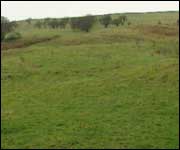 | | It's thought this was the site of the ironworks near Brayford |
The dig is part of a four-year excavation at the site, which is thought to date back to the late Iron Age. The team has dug a trench which is over 30 metres long and up to three metres deep.
The trench has revealed the enormous scale of iron production - and it seems the processes used were technologically well advanced. Excavation director Dr Gill Juleff said the amount of metal produced was far greater than would have been needed locally. It could have supplied markets throughout the Roman Empire.
She said: "One of the questions the team will be addressing is, if the Roman army were overseeing and directing iron production. Or was it being operated by the Roman imperial army, or being run by a local entrepeneur, supplying iron to markrets throughout the Roman Empire.
"Certainly, the amount of metal produced here was far greater than would have been needed locally."
 | | The slagheap site |
She added: "What we are seeing so far suggests that the iron production from Exmoor's ores was at its greatest during the Roman period.
"What we thought would be a straightforward site is turning out to be a very complex industrial operation."
Exmoor National Park Authority says the findings are exciting. The park's archaeologist, Rob Wilson-North said: "Archaeology on Exmoor is entering a new phase.
"This is an excavation that we have been wanting to carry out for some years. It is transforming how we see Roman Exmoor."
The dig is being run by the park authority, the University of Exeter, and the National Trust, following a grant from English Heritage.
|