The Government has admitted that they would handle aspects of any future outbreak of foot-and-mouth "differently" and "better" than their response to last year's epidemic.
The admission comes in the Government's formal submission to the independent Lessons Learned inquiry, chaired by Dr Iain Anderson - who recently visited Devon to meet some of the people affected by the outbreaks.
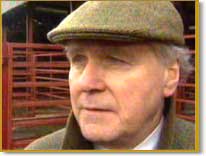 | Chair of the inquiry, Dr Iain Anderson |
In the submission, the Food and Farming Minister, Lord Whitty, said: "Many of the measures that the Government and the industry took were criticised at the time.
"Undoubtedly, there are some things that with hindsight we would do differently or better. We already have drawn up revised interim contingency plans which build on our experience and are in place to guide our response to any further oubtreak.
"There are further lessons to be learned. The Lessons Learned and the Royal Society inquiries will be comprehensive and fully independent. They will identify what should be done if we were faced with any future outbreak of animal disease.
"We need to ensure that all the issues are investigated thoroughly but quickly, so that everyone concerned is able to identify the best way forward and can deal with any future outbreaks of animal disease in the most effective way."
 | There were 173 confirmed
cases in Devon |
Among the policies criticised were the contiguous culls and the use of pyres to dispose of carcasses. Pyres are unlikely ever to be used again, in the event of future outbreaks.
But Lord Whitty said that responding to the disease was a huge undertaking: "This was an outbreak on an unprecedented scale - the world's biggest ever outbreak of foot-and-mouth disease.
"It should be remembered that the disease was on more than 50 holdings across the country before the index case was identified - the probable original farm at Heddon on the Wall."
He added: "The outbreak brought a huge response in effort and resources from Government; a wide range of public agencies, and the farming industry. At its peak, there were five times as many vets working in the state vetinerary service as in normal times.
"The armed forces also performed with great professionalism and speed in dealing with one of the largest peace-time logistical problems in recent times.
"The UK regaining FMD-free status less than a year after the start of such a major outbreak was a tremendous achievement for all concerned. "The farming industry and the rural community faces a dreadful time, but they met the crisis with resilience and fortitude," said Lord Whitty.
The inquiry has been criticised by members of the farming community, who have questioned its independence. They are also angry that the inquiry offers no opportunity for ministers and senior officials to be cross-examined about the measures they took.
The entire text of the Government's submission can be found on Defra's website, using the link on this page.
| 











