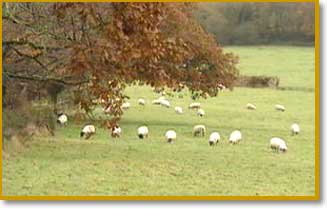
At midnight on November 26th, Devon was finally given the foot-and-mouth all-clear. The Government announcement that the county was risk-free came nine months after the first of Devon's 173 confirmed cases, and five months after the last outbreak. But for the county's farmers and the wider rural community, the aftermath of foot-and-mouth will linger for some time to come. For a start, farmers still have to apply for trading standards licences to move their stock. And the financial effects of the crisis will not evaporate, simply with the announcement that Devon is now clear of the virus. 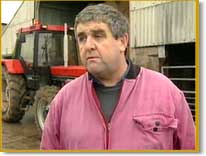 | Willie Cleave - back in action |
But there are also other knock-on effects - such as the continued suspension of livestock markets, and the likelihood of the Devon County Show in 2002 again being without sheep, pigs and cattle. It was back in February when Devon's first case was confirmed. It was at Burdon Farm, Highampton, at the holding of dealer Willie Cleave. For nine months, Burdon Farm was silent. There were none of the usual farm or countryside sounds - simply because there were no animals. Mr Cleave is now restocking, and trying to look forward rather than back:"It is nice to have your farm back again," he said. "We have been nine months to the day and the farm was not ours since the day we bought the sheep (which were infected). And it is very nice to have it back. "And now that the restrictions have been lifted and Devon is clear you can get on and do a lot more business and try and do something more." 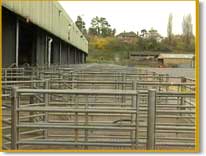 | Exeter Livestock Centre remains empty |
Now, farmers can move livestock under licence. They can export lamb to the rest of Europe and they can move sheep without having to get them blood tested first. But they still cannot take them to market.
Exeter's livestock centre, like others throughout the country, remains closed. It will probably re-open in the spring - but the stringent new hygeine regulations may mean that other markets will suffer. George Dumble, from the livestock market in Exeter, said: "The existing smaller markets - those that are not of a high standard - will probably close and we will have a dispersal of a limited number of markets across each region. I would see approximately five in the South West," he predicted.
The Devon County Show in 2001 had to be switched from May to August. The show was a great success, but livestock was not present because of the virus. The 2002 show is likely to be without livestock too. Restrictions remain in place across Devon which mean that livestock have to be kept in a location for 21 days before they can be moved.  | Some paths are still closed |
It would be impractical for stock to be kept at the show ground at Westpoint for that length of time. There is also concern about whether there are enough animals left in Devon to run the traditional livestock sections. Almost 400,000 animals in Devon were culled during the outbreaks. The show organisers have said it takes so long to plan the event, that they are having to forge ahead on the basis that cloven-hooved animals will once again been missing. Meanwhile, the countryside is almost back to normal for walkers. Some 96% of footpaths in Devon are now open. But some farms are still affected by restrictions, which means footpaths across them remain closed.
Click here to go to the Farming Index
|