|  | A lack of affordable housing means many more people in England's rural areas are becoming homeless, the Countryside Agency says.
Its annual State of the Countryside report shows the proportion of homeless households in remote rural districts rose by almost 30% in two years.
More people are moving from towns into rural England, causing house prices to rise faster, the agency says.
Homelessness charities have warned of a 'devastating impact' on rural families.
The report shows that the South West region has the second highest house prices after the South East.....coupled with some of the lowest earnings in England.
Countryside Agency chairwoman Pam Warhurst said increasing migration to England's countryside was having an 'unintended impact'.
She told BBC Radio 4's Today Programme: "There is an increase in the rural population which is putting pressure on housing stock and a number of other areas.
"There are people living in the country that have some disadvantage because of that.
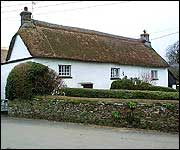 | | The South West has some of the lowest incomes in England. |
"We have to make sure when we look at policies to do with the countryside we do take on board that there are areas of deprivation that at the moment are not being adequately dealt with."
She urged the government to develop policies to ensure changes in rural areas were sustainable.
"Those who exercise their choice to move can reduce the choices of the less well-off in rural areas and affect the character of our countryside," she said.
"The most damaging effect is the increase in house prices, making fewer and fewer homes affordable for local families and increasing homelessness in remoter areas."
The report warns that homelessness is 'commonly perceived as an urban problem, largely as a result of the invisibility and underestimation of homelessness in rural areas'.
'Sofa-surfing'
The homelessness charity Crisis warned the phenomenon of 'sofa-surfing', where homeless people move from one friend's house to another, meant many local authorities were unaware how many vulnerable people needed help.
Research by the Countryside Agency and Crisis in North Yorkshire, found only half the homeless people staying with friends and family had applied for local authority help. Half were under 25 and one in five aged under 19. They also had a 'relatively high incidence' of personal issues including time spent in care, mental health problems, involvement with the criminal justice system and alcohol and drug misuse, Crisis said. Nationwide, the problem was exacerbated by a lack of social housing, the report said, accounting for only 13% of homes in rural areas compared to 22% in towns. Future prospects Whereas almost eight out of 10 homeless households in urban areas were given temporary accommodation, fewer than half those in remote rural districts were provided for.  | | Almost half those buying homes with land attached are not farmers |
Adam Sampson, director of Shelter, urged the government to reform the right-to-buy scheme so local authorities could protect stocks of social housing in rural areas. He said: "Many households are trapped in overcrowded or unsuitable housing, or even forced into emergency accommodation through homelessness. "This in turn has a devastating impact on the health, education and future prospects of these families."
A rural land survey in 2003 showed almost half those buying a house with land attached in England were non-farmers. Since 2002, house prices have risen faster in rural areas than in urban ones, with affordability an issue across England. More than a third of rural dwellers would have to spend over 50% of their household income each month on mortgage repayments, the report said. But despite this the 14m people living in rural England - almost three in 10 of the population - saw the countryside as 'a good place to live' overall.
 | previous rural news |  |
|