Punctuation
Revising basic punctuation
When punctuation is not used, or used incorrectly, sentences can become difficult to read and understand. Punctuation is a very important, useful and powerful writing tool.
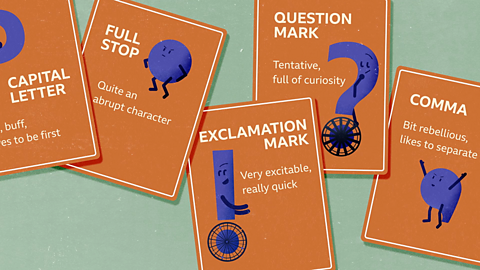
When to use brackets
Everything you need to know about brackets, what they are, and how to use them in different ways.
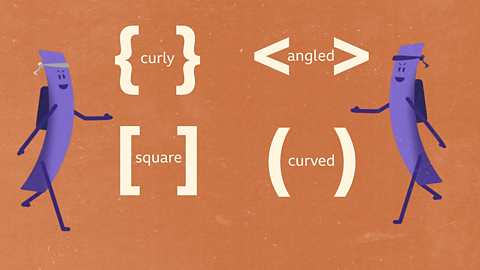
When to use a colon
Colons are punctuation marks which can help you to introduce lists, introduce quotations, include extra information and separate closely-related clauses.
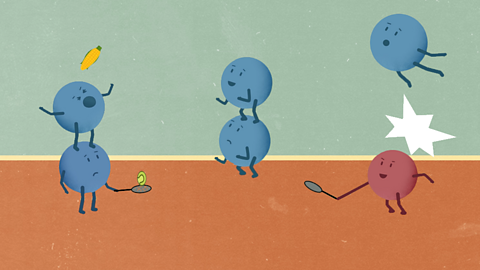
How to use semicolons
Not as final as a full stop but stronger than a comma; learn how a semicolon can either join or separate words.

How to use semicolons in a list
Find out how to separate items in a list using semicolons with BBC Bitesize KS3 English.
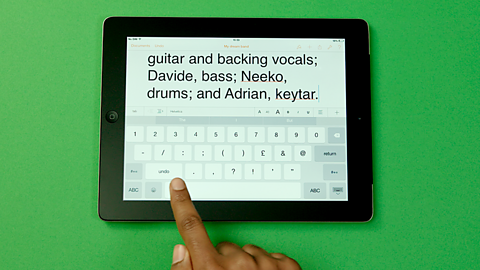
How to punctuate quotations in an essay
Learn how to punctuate quotations in an essay using examples from a source text. Using quotations correctly in your essay is important for supporting your points.

How to structure and punctuate direct speech in fiction
Dialogue makes a story engaging, if you make it clear who's speaking. Learn how to structure and punctuate direct speech in fiction with BBC Bitesize KS3 English.

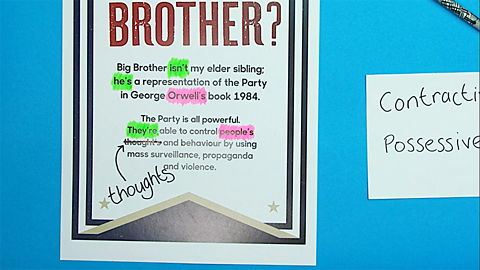
How to check your apostrophes are correct
Find out how to use apostrophes to show possession and for when letters are omitted from words.
What is a comma?
Discover what a comma is in this handy step-by-step guide from KS3 English.
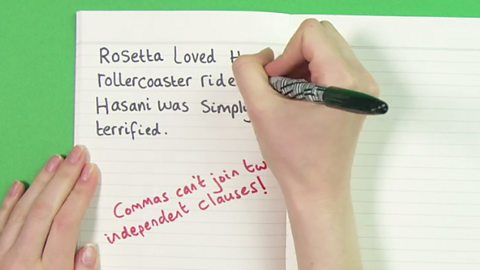
How to punctuate independent clauses
An article featuring advice and guidance on how to use commas to punctuate sentences.
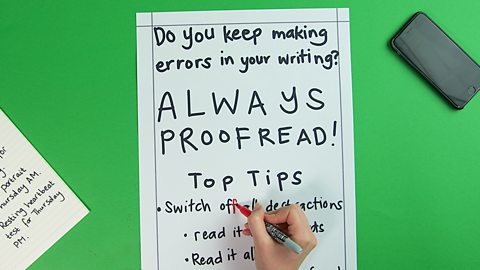
How to proofread
Learn proofreading techniques to check your writing for mistakes and improve your writing.
Links
- External linkExternal link
- SubscriptionSubscription
- External linkExternal link
- External linkExternal link
- External linkExternal link
- External linkExternal link
- SubscriptionSubscription
