Imagine the excitement. A promising new player has signed for your team, there's a big new Marvel trailer out, or a box-fresh BTS single has landed on streaming to go with all the others you've played thousands of times already.
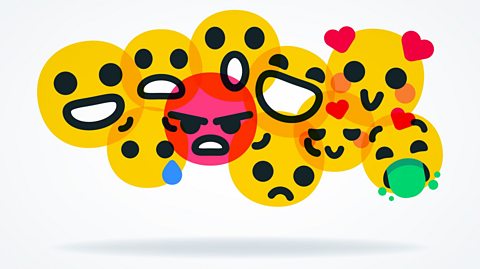
You go online to see how your fellow fans have greeted the news - but it’s not exactly what you expect. Snarky comments about new players keeping the subs bench warm for 90 minutes, Spider-Man being a bit 'underwhelming' in his webby-ness or how BTS aren't sounding as poppy as they should. So why is it that fans can sometimes be so negative online?
When fandom becomes negative
Some psychologists say that that the more passionate a fan is, the more they see the thing they love as part of their personality. So, if you've been a massive fan of Stranger Things from the beginning and the series' conclusion doesn't fit your idea of what the show is all about, you're more likely to post something negative about it on your socials. Even though you love it, you're so invested in the programme, that you almost feel you 'own' part of it, so it's important to you to express your feelings.
Negative fandom can show itself in different ways. To find out more, BBC Bitesize Other Side of the Story spoke to Dr Bethan Jones of Cardiff University, an expert in what is sometimes described as ‘toxic fandom’.
Why can it feel like fan vs fan?
There can be examples of bias in the negativity shown by fandom, as Dr Jones explained in relation to gaming - when some male fans became annoyed about female gamers wanting to join in.
“They didn’t like the fact that female gamers, female writers, critics and game designers were coming into their space. There was a sense [from the male fans] that, ‘this is ours. We want to protect it’.” In this case, Dr Jones said, it even led to threats against some female gamers.
This can be seen as an example of gender bias - where somebody’s opinion on someone else is formed entirely by their gender and has nothing to do with, in this case, their knowledge or skill of gaming. Dr Jones also remembered a similar incident, in relation to the Twilight series of films and the band Muse, who became more popular with teenage girls when the band's music was used in some of the movies' soundtracks.
Dr Jones explained: "You had some Muse fans going, ‘…we’ve got these girls coming into the fanbase. They don’t understand the band! They were predisposed to hate them because of the fear they had about what Twilight fans would do to their fandom space. You’ve got that love of one [thing] which will inevitably lead you to hate another. There’s biases in terms of who we assume the audience is for that other [thing].”

What is gatekeeping?
Negative reactions to newer fans joining an established fanbase, such as the gaming and Twilight examples, is often described as gatekeeping.
Dr Jones has seen this at first hand, as a fan of the sci-fi series The X Files, which first aired more than 30 years ago. The original series ended in 2002 but returned in 2016 - bringing in new fans.
She remembered: “There was this real kind of distinction between the original fans and the revival fans. And there was a lot of gatekeeping that took place, kind of in fandom because, partly, the new fans were doing it ‘in the wrong way’. They weren't used to the wait between episodes, the wait between seasons. They didn't have that historical knowledge of the fandom - so there's a lot of gatekeeping there.
“It comes back to the idea of, we love this thing and we love it the ‘right way’, so we hate the things that you do or that you say.”

Why does my team frustrate me so much?
Away from popular culture, sports teams attract diverse and passionate fandoms. That passion can show itself in social posts during a game which criticise the players, the coach, the manager - even if they’re in the lead. What’s going on there, then?
“I do wonder how much of it comes back to the idea that we love to hate things.” said Dr Jones.
“I think part of it might be this idea that we know better as the fans. In terms of things like football, this is blatantly not true because none of the fans are on the pitch playing, they're not managing the teams away. But a lot of fans have that historical background.”
If you have followed a team since you were a child, Dr Jones explained, there’s a good chance your parents and grandparents have followed the same team: “So you’ve got this huge amount of cultural knowledge that’s being built up. So we’re being held up to this kind of historical standard… the team might be winning, but we can do better - it’s that element of wanting to strive for something more, like your best isn’t good enough.”
This could be described as a kind of nostalgia bias, or something psychologists call ‘rosy retrospection’ - when people see the past as being more positive than the present. An example of this can be posts from fans of long-running shows such as Doctor Who, when people compare the most recent series to earlier ones.
How can fans apply critical thinking to what they see online?
If you follow certain fan accounts and not others, you may have put yourself into an echo chamber, where you only see opinions that reflect your own. Dr Jones recommends that, in fandom, moving beyond your echo chamber is “really, really important” so that you get to experience opinions which provide a fuller picture of what different people enjoy. It will also make your socials’ algorithm serve you different content as well.
Dr Jones said: “Look beyond the stuff that the algorithm is feeding you.
“If you get tonnes and tonnes of content about complaints, or about how stupid the creators of a show are, think about stopping and taking a step back.
“It’s hard to do when you're passionate. I'll do the same thing! But I think that pausing, particularly if you were about to start writing something on [X] or Instagram or TikTok that's going to be critical - just pause.
“Look for other commentary, because there's tonnes of it out there, particularly in fandom spaces, there's a huge amount of commentary that will come out from every different angle. Exposing yourself to those ideas, not just the ones that are being fed to you, is really important in terms of developing critical thinking skills.”
She added: “Critical thinking is a big part of it, but so is empathy. We’re so caught up in our love for the subject, whether it’s a sports team or a band, or a TV show, that we stop seeing other fans, actors and producers as people. You’ve got this sense that what you say goes in the ether and no-one is going to see it. They are going to see it. Having empathy for people and thinking, ‘how would I feel if I read that about myself?’ is hugely important.”
This article was published in April 2026.

Not sure if the news you’re seeing on social media is true or false? Can you always tell if the things you see online are real or fake? Learn how to get the other side of the story with our quizzes, videos and explainers.
Concert ticket scams you'll find on social media and how to avoid them
Advice if you're planning to see BTS, Raye, Gorillaz or any big names on stage this year

What can The Celebrity Traitors teach us about unconscious bias?
How prior knowledge and experiences may be influencing the players' votes