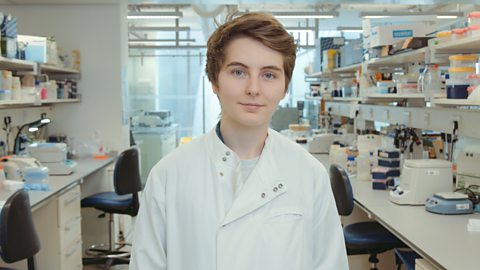
Meet Becky, 21, to find out more about life as a prosthetist. Part of our Bitesize world of work series.
Hi, I'm Becky. I'm 21 and I'm a prosthetist-orthotist. So a prosthetist is someone who creates a new limb for someone who is missing a limb. And an orthotist is someone who creates a brace or footwear in order to aid the limb's function.
As a prosthetics and orthotics student, every day is a learning day. We also have lectures, but practical sessions where professional patients come in and we learn from them doing our hands-on skills and then we'll do also the manufacturing aspects as well.The skills that I use day-to-day are my maths and my physics well as anatomy and pathology, and these are really important to be able to understand the patient and their needs, and what we can do to help them. We see a lot of patients with learning difficulties or autism and war veterans with things like PTSD, so we need to be personable and empathetic to them in order to give them great care.
When I picked my A-levels, I always thought that I wanted to do architecture or bioengineering because these incorporate creativity but also science. But when I went on a Headstart course I realised that I wanted to do prosthetics and orthotics as we have a lot more of the clinical side working with people, as well as incorporating the creative and the scientific aspects.
The highlight for me on this course, was the opportunity that I got to go out to Uganda, to help other people out there with prosthetics and orthotics. In the future, I'm looking forward to working in more challenging environments like this. I love my job because it's a really exciting industry. I also think I make a real big difference to people's lives, which is really fulfilling.
"I make a real big difference to people's lives, which is really fulfilling."
Prostheses are artificial devices which replace a missing body part.
Orthoses are braces that help to aid or support a limb to function.
Becky helps to fit prostheses and orthoses. She then works with her patients to help them to use their new body part or brace effectively
Becky is studying a vocational degree. The course is very practical – it involves making the prostheses, as well as fitting them
Maths and Physics are important in her work, but people skills are also very important as she works with a variety of different patients and needs to be friendly and understanding.

What to expect if you want to be a prosthetist-orthotist
- Prosthetist-orthotist average salary: NHS band [5-7]. Read more about NHS bands. Salaries will differ in private healthcare.
- Prosthetist-orthotist typical working hours: 37 to 40 hours per week. You could work on shifts (days / nights / weekends)
What qualifications do you need to be a prosthetist-orthotist?
You could get into this role via a university course or an apprenticeship. For an undergraduate university course, or a degree apprenticeship, you’ll usually need four or five GCSEs, or equivalent, at grades 9 to 4 (A to C) and A-levels, or equivalent. Alternatives to A-levels include taking a T-level (England-only), which is equivalent to three A-levels. Check with your course provider which alternative qualifications they accept. Alternatively to a degree or degree apprenticeship, you could do an advanced apprenticeship, which requires five GCSEs, or equivalent, but not A-levels, or equivalent.*
This information is a guide and is constantly changing. Please check the National Careers Service website for the latest information and all the qualifications needed. (sources: National Careers Service)
For careers advice in all parts of the UK visit: National Careers Service (England), nidirect (Northern Ireland), My World of Work (Scotland) and Careers Wales (Wales).
Find out more
For more information on becoming a prosthetist/orthotist, you can check out:
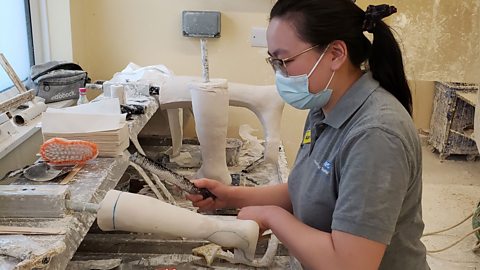
Karrie: orthotist
Karrie's role involves finding devices to help people experiencing physical difficulties.
Khadija: first aider
Khadija uses her medical knowledge to teach young people first aid.
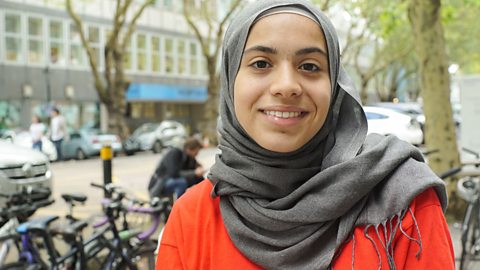
Jaz: research scientist. video
Jaz is a research scientist and PhD student.