At the beginning of a new year, it’s easy to forget what daylight actually looks like.
Longer periods of darkness in the winter months can have some of us longing for the late spring and summer, when the sun seems to be in the sky for hours on end before it sets.
But does sunlight have a direct effect on our mood? Are we happier in the daylight than the dark? BBC Bitesize Other Side of the Story has thrown some light on the subject to find out more.
How does daylight affect our sleep?
As part of BBC Radio 4's What’s Up Docs podcast, Doctors Chris and Xand van Tulleken spoke to Professor Hester Parr from the University of Glasgow about the impact of daylight on people.
Prof Parr is a human geographer, someone who looks at the different ways people interact with their environments. She explained that natural light - not the electrical kind - does have an effect on our bodies: “Sunlight stimulates a part of the brain that controls our circadian rhythm - which is like our internal 24 hour [sleeping and waking clock] - and a lack of sunlight can throw that clock off.”
When that happens, Prof Parr continued, our brains get more of the sleep hormone called melatonin and less of the hormone serotonin, which makes us feel good. There is no balance between the two levels and that can make us feel less happy and more tired.
How does sunlight affect our mood?
Have you ever felt more cheerful when the sun is shining and spring is in full bloom?
This may be because the brighter colours nature has on show at sunnier times of year can really give our feelings a boost, as explained in this BBC Weather article. One colour - yellow, the very shade of sunshine itself - was even found in a 2019 psychology study to bring a great deal of joy to people who live in traditionally wet and cooler countries. The UK has a habit of being damp and chilly at times, and more than 60% of people from this country who were tested found the colour yellow a joyful one. It's not just the Sun that brings out the yellow in life during spring and summer - think of daffodils, sunflowers, buttercups and lemons.
Yellow was seen as a happier colour than duller ones in the study, which were linked more to serious events.

How do we make sure we’re getting enough daylight?
Just as we might be prescribed a certain dose of medicine if we’re unwell, there is a certain amount of daylight we can expose ourselves to if we want to make sure we’re getting enough.
This is measured, Prof Parr said, in lux - units of light intensity. People need about 10,000 lux every day as a minimum. She continued: “ If we go outside on a bright and sunny day we might have anything between 50,000 and 100,000 lux.”
And we also get other good stuff from daylight too, such as vitamin E - which is good for our skin, eyes and immune system. That extra light can also help us process information more efficiently too. Perhaps we can see a stroll through the morning sun as another way of recharging our batteries!
What is seasonal affective disorder?
You may have heard of something called SAD - or, seasonal affective disorder. It’s a condition where the reduced hours of daylight during the winter can make some of us feel a bit low. The NHS website describes it as a kind of depression that make people feel more tired, hungry, unsure of themselves and unable to enjoy their usual interests, among other things.
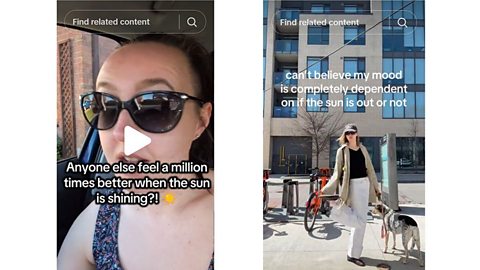
It’s a subject that’s also had people talking on socials, with more than 20k TikTok posts tagged #seasonalaffectivedisorder and more than 160k on Instagram. Not everyone believes the condition is real, and there are some posts from people who feel sadder in summer than in winter, something the NHS website confirms.
How can we trust posts about our health?
Not every post on socials believes that SAD is a real condition or that daylight can lift our mood. Prof Parr is an expert and her job involves thorough research and analysis into conditions like SAD, so we can value her opinion as a trusted source and expert.
If someone posts an opinion on a subject, without doing any research first, there is a danger it could be false information - also known as misinformation. It’s important to always look for more than one source of information on a story before sharing posts on a subject - and try to look for those experts first, whether it’s an organisation like the NHS or an academic like Prof Parr.

Not sure if the news you’re seeing on social media is true or false? Can you always tell if the things you see online are real or fake? Learn how to get the other side of the story with our quizzes, videos and explainers.

Does cracking your knuckles lead to arthritis in later life?
Dr Chris and Dr Xand on the claim many of us hear as we are growing up