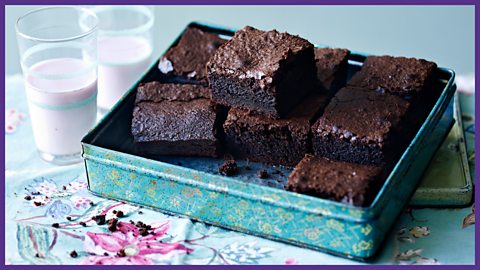
World Chocolate Day is celebrated each year on July 7, marking the supposed date chocolate was first introduced into Europe and giving chocolate lovers everywhere a chance to celebrate the sweet treat.
A recent survey of more than 2,500 school children by the British Nutrition Foundation found that chocolate was one of the most common snacks, with 32% of children saying they ate it regularly.
But should children avoid chocolate altogether, or is there a way that they can enjoy it in moderation? Bitesize Parenting spoke to Abi Freedman, a children's food expert from Kids Dietitian, and mum of two, to find out whether there really is a 'sweet spot' when it comes to parents, children and chocolate.
Are there any benefits to chocolate for children?
Abi told us: "Chocolate can absolutely have a place in a healthy, balanced diet. Healthy eating isn't about perfection, it's about the overall pattern of what children eat over time. If the majority of a child's diet includes a variety of fruits, vegetables, wholegrains, protein-rich foods and calcium-containing foods, there's certainly room for occasional chocolate and other treats too."
Cocoa, a key ingredient in chocolate, contains flavanols, a type of antioxidant that research in adults shows may provide health benefits such as reducing blood pressure and keeping blood vessels healthy.
However, Abi warns we should keep these findings in perspective. She says: "Many commercially available chocolate products, including popular brands of milk chocolate contain relatively small amounts of flavanols because processing can reduce their levels." Children are much better off getting a wide variety of plant compounds from fruits, vegetables, beans, nuts, seeds and wholegrains.
Is dark chocolate good for you?
"Dark chocolate is generally safe for school-aged children, but there are a few things to bear in mind," says Abi.
Dark chocolate usually contains more cocoa solids and therefore more flavanols than milk chocolate. However, it also contains more naturally occurring caffeine and compounds called theobromine.
Abi explains that for most children, a few squares of dark chocolate occasionally are perfectly fine. Abi also points out that many younger children find dark chocolate quite bitter, so there's no nutritional need to encourage them to eat it over milk chocolate.
Milk chocolate contains less cocoa and fewer flavanols, while also being higher in sugar. Because of this, eating too much milk chocolate is not recommended for children as it can contribute to tooth decay and weight gain.
White chocolate contains no flavanols, so doesn't offer the same health benefits that dark chocolate does.
Does chocolate have caffeine in it?
The Food Standards Agency says that there is around 25mg of caffeine in a 50g bar of plain dark chocolate and around 10mg in a 50g bar of plain milk chocolate.
The NHS advises that children limit their caffeine intake where possible, but doesn't specify an exact amount to stick to, however the European Food Safety Authority suggests that up to 3mg of caffeine per kilogram of body weight per day is unlikely to pose a risk to children – a guideline often used by health experts.
Abi warns: "Very large amounts of chocolate isn't recommended, particularly for younger children or those who are sensitive to caffeine, as they may contribute to restlessness or difficulty sleeping."
How to reduce sugar in a child's diet
A bar of milk chocolate generally contains about 50% sugar, meaning a 50g bar of chocolate can contain approximately 25g of sugar, which is just over six teaspoons. The NHS recommends that children aged seven to 10 should have no more than 24g of free sugars a day.
Abi explains: "For children, we want to keep free sugars (the sugars added to foods and drinks, plus those naturally present in honey, syrups and fruit juices) within recommended limits. Too much free sugar can increase the risk of tooth decay and contribute to excess calorie intake."
Rather than focusing on the occasional chocolate bar, she suggests it's often more helpful to look at where sugar appears throughout the day, as sugary drinks, sweetened yoghurts, breakfast cereals, biscuits and snack bars can quietly add up. However, Abi points out that chocolate is usually eaten in relatively small portions, whereas sugary drinks can provide large amounts of sugar very quickly without making children feel full.
Abi reassures parents that they don't need to count every gram of sugar. "Instead, aim for treats to be just one part of a balanced diet, encourage water or milk as everyday drinks, and keep regular dental care and tooth brushing with fluoride toothpaste a priority."
How much sugar per day is healthy for children? A guide for parents
Should chocolate be given as a 'treat'?
Abi explains: "Allowing snacks like chocolate to be enjoyed as a normal part of family life can help children develop a healthier relationship with food. When we avoid labelling foods as "good" or "bad," most children are less likely to see chocolate as something they need to overeat whenever they get the chance."
She adds that food is also about enjoyment, celebrations and social occasions. "Birthday cake, Easter eggs and hot chocolate on a cold day are all part of life's pleasures, and they can happily sit alongside nutritious everyday meals."
Abi advises: "If chocolate is presented as a forbidden prize or something children have to "earn" by eating vegetables or behaving well, it often becomes even more exciting and desirable."
Instead, Abi suggests that parents try treating chocolate as just another food: "You might include a small chocolate biscuit after a meal alongside a fruit at weekends or enjoy dessert together after dinner without making a big fuss about it."
Abi told us that children are incredibly good at picking up our attitudes towards food. "If parents talk about feeling guilty after eating chocolate, children can begin to develop similar beliefs. A calm, matter-of-fact approach helps children learn that all foods can fit, but some are everyday foods and some are occasional foods."
Abi's tips for encouraging balance and healthy eating habits around treats
Abi says that there are lots of simple strategies that work well to help encourage healthy eating habits:
Keep regular meal and snack times. Children who skip meals or are genuinely hungry are much more likely to overeat treats.
Pair treats with filling foods rather than offering them on an empty stomach, try pairing fruit with a few squares of chocolate or yoghurt with chocolate shavings.
Avoid using sweets or chocolate as rewards for behaviour or achievements.
Let children see adults enjoying chocolate in moderation without guilt.
Focus conversations on what foods help our bodies grow, play, think and feel energetic, rather than talking about calories or weight.
Offer a wide variety of foods repeatedly without pressure. Children often need many opportunities to accept new foods.
Remember that healthy eating happens over days and weeks - not in a single meal.
Abi says that you should try not to panic if your child has a day where they've eaten more treats than usual. "One birthday party won't undo a healthy diet, just as one portion of broccoli doesn't make a diet healthy!" Abi says that a balanced approach, where nutritious foods make up the foundation and treats are enjoyed without guilt, is far more likely to support healthy habits that last into adulthood.

Bitesize Parenting
Fun activities, real-life stories, wellbeing support and loads of helpful advice - we're here for you and your child.

Happy Family Eating... a fun guide for parents
An overview of our detailed resources and guides to helping your child enjoy and understand their food
Five cooking and baking activities to try with your child
Ideas to get your kids in the kitchen, trying new flavours and learning the basics of cooking and baking.