A wise man once said: “Life is a rollercoaster, just gotta ride it.”
For some, the words of Ronan Keating will never have been truer as theme parks across the country prepare to reopen after their doors were shut during the lockdown.
The idea of climbing aboard one of the country’s highest or fastest rollercoasters would fill many people with dread – while others will already be excitedly planning their pose for the photo halfway round.
But what is it about rollercoasters that some of us find so appealing?
Fight or flight
If you’ve been on a big ride at a theme park before then you may have had a few butterflies in your stomach as you approach the front of the queue.
Dr Richard Stephens, senior lecturer in psychology at Keele University says that’s completely normal.
“We experience an element of fear on a big ride, which becomes manifest in our bodies as rapid heart rate, faster breathing and a glucose boost that makes us more energetic.
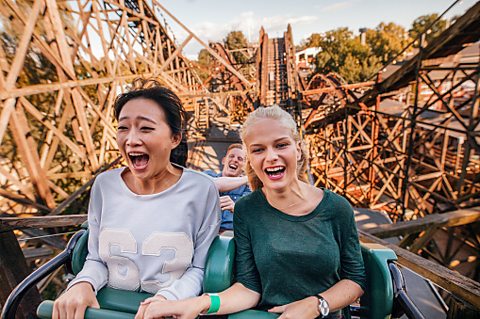
“This is the fight or flight response. Some people find it fun to go through these visceral responses in the regulated and mostly safe environment of riding a rollercoaster. It's like choosing to watch a horror film.”
A study in Germany looked at the heart rates of 55 healthy men and women before, during and after a spin on the Expedition GeForce ride at Holiday Park in Hassloch.
Over the 75 second ride, which reaches heights of 53 metres, speeds of 120 km/h and features a mind-boggling 82 degree drop – the volunteers’ heart rates soared from an average of 89 beats per minute before they set off to average highs of 155 beats per minute after the first few twists and turns.
As with horror films, those sort of adrenaline rushes might not be your cup of tea. So, if you’ve ever hidden behind the sofa while watching a scary movie then you might empathise with your friend who holds the coats while you’re spinning upside down on a ride.
A need for speed
While triggering the fight or flight response might be key for some theme park enthusiasts, Richard thinks there’s a simpler reason why so many of us love rollercoasters: Speed.
Even at your local funfair, you’ll often hear delighted shrieks in response to that eternal phrase ‘scream if you want to go faster!’
Richard says his favourite ride is Galactica at Alton Towers because “you are suspended below the car horizontally in a kind of superman flying position, and everything below you is very open. It feels like you're flying - soaring, swooping, gliding - a very novel experience.”
He says these rides trigger another natural response.
“One aspect of riding rollercoasters that is enjoyed by all is the feeling of moving at speed. A child, having learned to walk, will soon begin to run. Riding a bike is fun, but riding down a hill is more so.
“This is because of a psychological phenomenon called 'flow'. We experience flow when we are challenged but not overwhelmed. Flow is the happy space between boredom and stress.
“Speeding up increases challenge to a point where things get more interesting.”
But flow can also explain why some people aren’t fans at all of rollercoasters.
“There comes a point where the speed is perceived as overwhelming,” says Richard.
“A negative feeling of stress takes over from the enjoyment of flow. Now we are in a realm of experience that not everybody is comfortable with.

Five facts about UK rollercoasters
- The oldest rollercoaster in the UK is the Scenic Railway at Dreamland in Margate. It first opened in 1920 and can reach speeds of 35 miles per hour
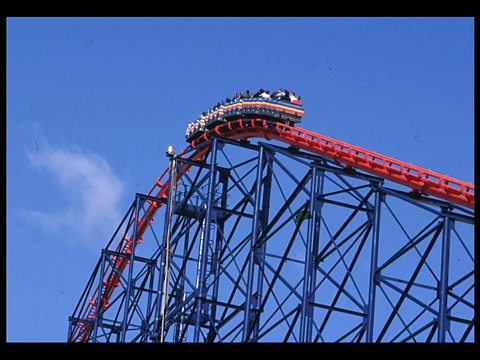
- The Big One at Blackpool Pleasure Beach is the UK’s tallest rollercoaster at 65 metres high, at one point the highest in the world
- The fastest rollercoaster in the UK is Stealth at Thorpe Park which accelerates from 0 to 130km/h in less than two seconds
- The Smiler at Alton Towers features more inversions than any other rollercoaster in the world – it will spin you upside down 14 times in less than three minutes
- Lightwater Valley is home to the longest rollercoaster in both UK and Europe – The Ultimate runs at 2,268 metres and used to be the longest in the world
If flow is your thing, then what is actually happening to your body during a high-speed rollercoaster?
A study by students at Imperial College showed that, in addition to an increased heart and breathing rate, some people on rollercoasters also experienced periods of involuntary apnoea (breath holding) during turns on rides with high G-force.
None of that sounds particularly appealing though – so what is it that makes us come back time and time again?
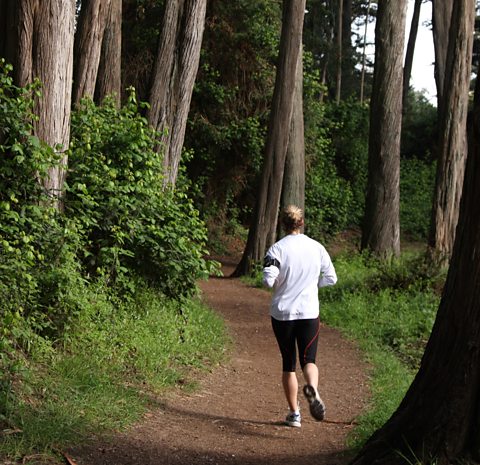
Richard says: “Going on rides can release endorphins, which are known to increase feelings of intense pleasure and are associated with the runner’s high.
“Research has verified that people can become addicted to running, so there is a possibility that people could also become addicted to rollercoasters but I’m not aware of any such cases.”
So with rollercoasters up (and down and up and down again) and running once more, don’t be surprised to see plenty of (socially-distanced) queues for some of the scariest rides in the country – even if the idea of getting on board doesn’t make sense to you.
What happens to your body during a horror film?
A good scare can affect your heart, breathing and even your eyes

Why now might be the perfect time to get on your bike
The number of people cycling during lockdown has doubled - but what are the benefits of riding a bike?
The Couch to 5K number crunch quiz
Test your knowledge of distance, speed and time equations.