
|
 |
 | | | | | | |||||||||||||||||||||||||||||||||||||||||||||||||||||||||||||||||||||||||||||||||||||||||||||||
| | | You are in: Business | |||||||||||||||||||||||||||||||||||||||||||||||||||||||||||||||||||||||||||||||||||||||||||||||||
|
| | Tuesday, 24 September, 2002, 17:07 GMT 18:07 UK Euro rules 'need relaxing' 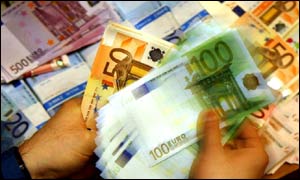 Would more flexibility lead to less credibility?
The European Commission has admitted for the first time that the financial rules governing the euro need to be made more flexible to take account of Europe's economic weakness. It warned that Portugal, France, Germany and Italy all run a high risk of breaching the eurozone's Stability and Growth Pact. Designed to impose financial discipline among the euro's 12 member states, the pact has, in recent months, been the focus of growing political controversy. But some have argued that relaxing the rules could damage the credibility of the currency. More flexibility For months, it's been increasingly obvious several euro members would fail to meet explicit targets for cutting their government overspends. Earlier this summer, Portugal became the first country to break the rules - it admitted its budget deficit last year had been significantly higher than the upper limit of 3% of GDP allowed under the pact. Now, the European Commission says it wants to give countries more leeway to balance their budgets in times of economic difficulty. In practice, this would mean most would have two more years, until 2006, to bring their finances out of the red. Brussels insists the Stability Pact itself would not be altered, just the way the rules are enforced. In return for more flexibility during downturns, it says, governments would face tougher targets once the economy picks up. Change inevitable? The Commission's proposals will be highly controversial. Some member states, France and Italy foremost, have argued for more flexibility. Others, including the European Central Bank, have resisted all talk of change, fearing it would harm confidence in the euro itself. Brussels' move is almost certainly a pre-emptive one - by proposing modest reform, it hopes to head off demands for more radical change. The attitude of the German Government will be critical. In the run-up to last weekend's election, it said the Stability Pact was untouchable. But that may change as Germany faces possible EU disciplinary measures, as well as having to make politically unpopular spending cuts to meet its obligations. | | See also:  16 Sep 02 | Business 15 Sep 02 | Business 16 Sep 02 | Politics 12 Sep 02 | Business 22 Jul 02 | Business 11 Jul 02 | Business 10 Jul 02 | Business Internet links: The BBC is not responsible for the content of external internet sites Top Business stories now: Links to more Business stories are at the foot of the page. | |||||||||||||||||||||||||||||||||||||||||||||||||||||||||||||||||||||||||||||||||||||||||||||||
| |
|  E-mail this story to a friend E-mail this story to a friend |
| |
| Links to more Business stories |
| | | ||
 | ||||
 | | Back to top
| ||
| ---------------------------------------------------------------------------------- To BBC Sport>> | To BBC Weather>> | To BBC World Service>> ---------------------------------------------------------------------------------- © MMIII | News Sources | Privacy  |






